
Inside the Mind of Our Travel Team: Marisa Reflects on Our Inaugural Trip to Ethiopia
Written by Marisa Cleveland, Ties Travel Team
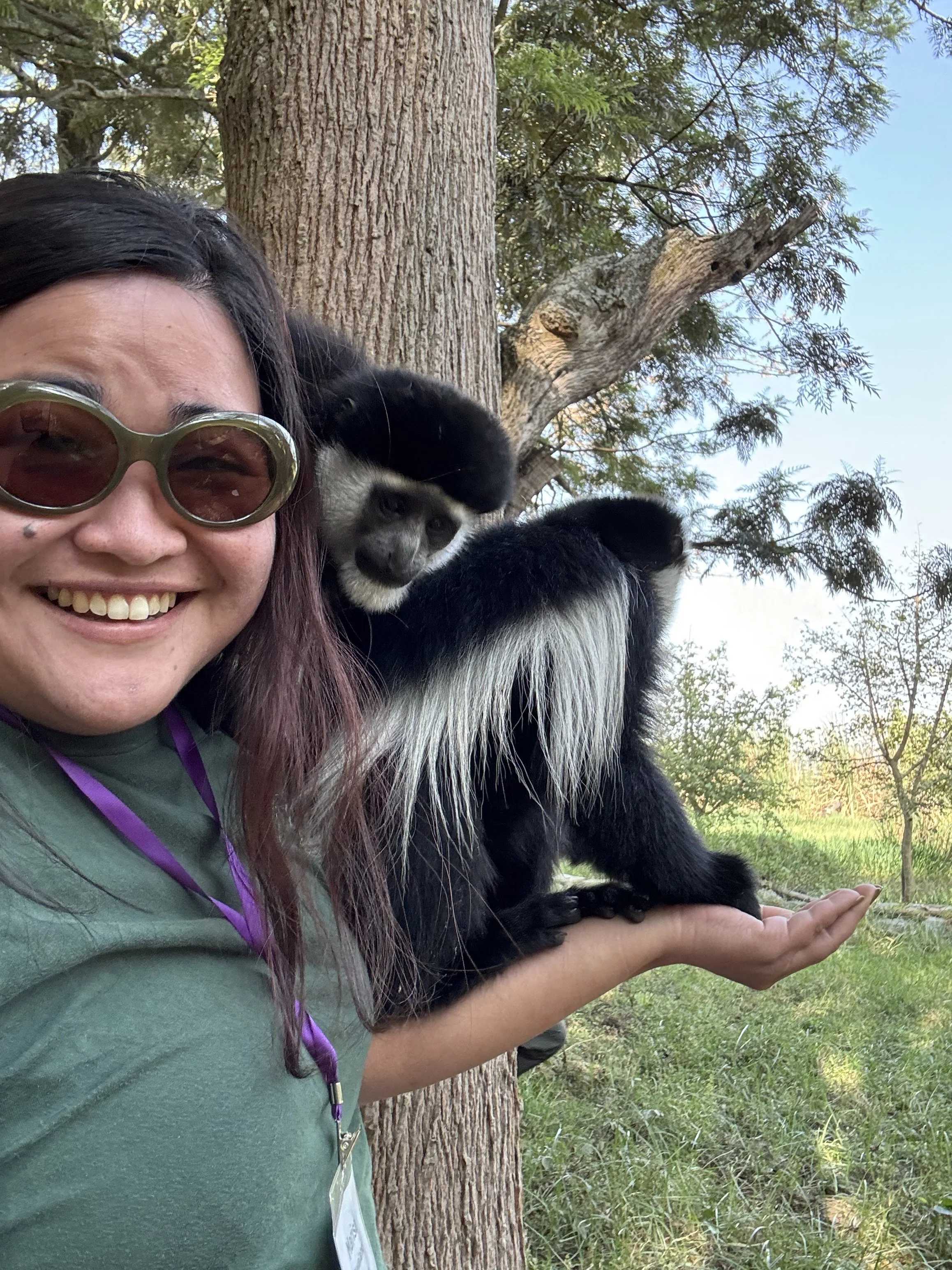
Marisa takes a selfie with a mantled guereza.
As a Korean adoptee who traveled to South Korea in 2011 solo to teach English for my first trip back to my birth country, I am keenly aware of the benefit of adoptees and their loved ones traveling together. Since I started working with the Ties travel team in 2016, I’ve traveled with groups to China, Kazakhstan, and Korea and seen first hand how beneficial it is to have a support system around you. For the last several years, I’ve been staffing Ties’ adoptee-only Guatemala Service & Language program.
So, when Rebecca approached me to lead the inaugural Ethiopian Ties trip, I was nervous and excited. Heritage trips are deeply meaningful, and with that meaning comes responsibility. I worried that my heritage trip team member skills were rusty as the Service & Language tours are a very different cadence and require different skills as a team member.
Regardless of the tour focus, before every journey, there are always the same worries running through my mind:
Logistics: Do I have the right information?
Travel: Will we get from point A to point B without any issues?
Group dynamics: Will everyone get along?
Individual participants: Is everyone doing okay? I should talk to that adoptee later, make sure they’re OK?
How I’ll show up: Will I be rested enough to be present for others? Since I’m the only travel team member, what will happen if I get sick?
Once I landed in Ethiopia, some of that stress went away. One behind-the-scenes practices at Ties that makes a real difference is having the travel team arrive before participants. That extra time allows us to settle in, recover from jet lag, and coordinate final logistics with our in-country team so we can be fully present when travelers arrive.
The first thing I noticed as I walked off the plane, coming from Wisconsin in December, was the warmth of the air in Addis Ababa. The sun was beating, and the air was warm, heavy and unfamiliar. One of the adoptees later shared that stepping off the plane and taking a deep breath felt like coming home - that the smells seemed familiar and welcoming in an unexpected way, but that more importantly, it served as a way to ease into the trip.
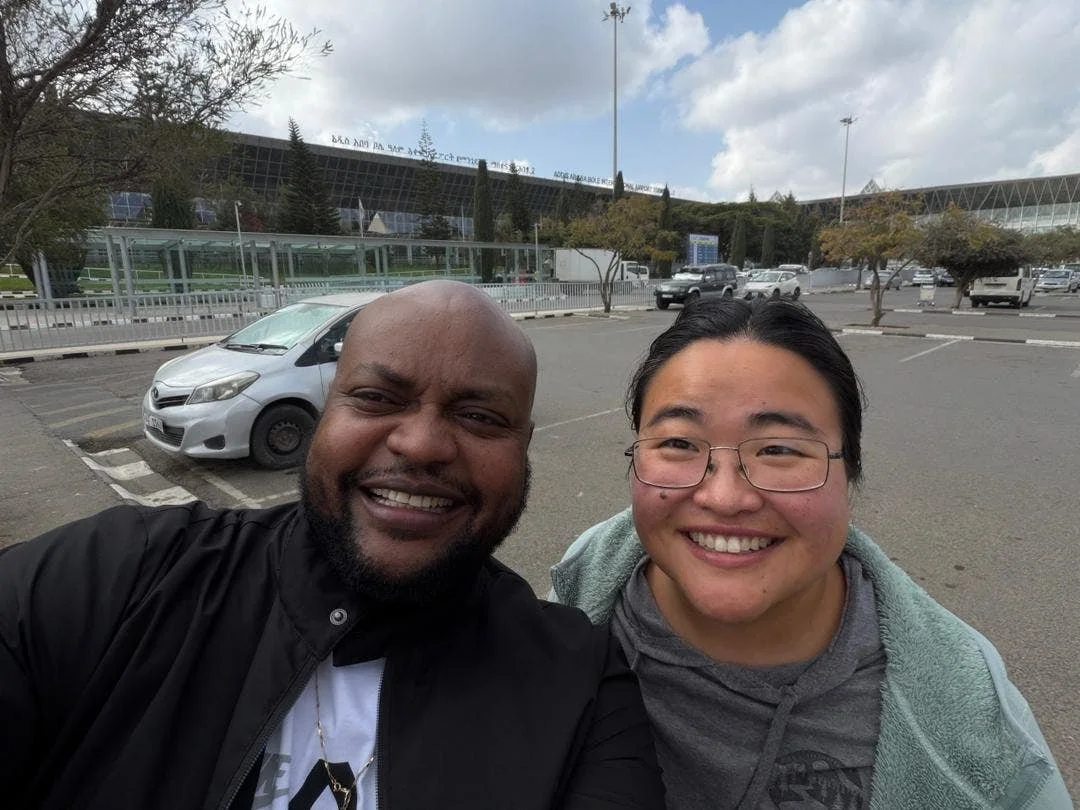
Marisa & Tarik in Ethiopia before the tour started.
When Tarik, our head Ethiopian guide, picked me up, I instantly knew that Ties had chosen the perfect in-country partner. Tarik is adaptable, friendly with everyone, and goes the extra mile to ensure adoptees and their loved ones are well cared for. Tarik’s presence throughout the trip created a sense of safety and trust that allowed participants to fully immerse themselves in the country, their heritage, and the journey itself. His dedication reminded me why having the right local partner is not just helpful, it is essential to the success and emotional impact of a heritage trip.
My nerves often still remain until adoptees and loved ones arrive and we hold an orientation meeting. Then things start to click! Our inaugural group was small, with two families totaling twelve participants. This included four adoptees from Ethiopia, an adoptee from Kazakhstan, two sets of parents, a sibling, and one set of grandparents. Smaller groups bring both challenges and beautiful opportunities for deeper individual connections, and we experienced both on the trip.
Throughout the trip, we saw powerful moments of belonging unfold. While we were out and about, people would often speak to the adoptees in their local language. These small, everyday interactions carried a lot of meaning and often became some of the most memorable parts of the journey.
It was especially visible one evening in Hawassa, a beautiful lakeside resort town, when a small group of us went for a walk after dinner during the festival of Saint Gabriel. Ethiopia is a deeply Orthodox country, and saint festivals are widely celebrated with large public gatherings. A local church named after Saint Gabriel is a central gathering spot for the holiday and throngs of people come from all over the country to worship together. Two of the adoptees walked slightly in front of the group and blended in naturally in the crowd. I’ve seen adoptees in China, Kazakhstan, Korea, and Guatemala do this same thing. It’s a universal desire for adoptees to “fit in” among people who look like them. It does not always come easily, because many of us grow up navigating different cultural systems than those of our birth countries. During our Connect & Chat* time, we talked about what it’s like to be visibly different in the United States, and how meaningful it was, even briefly, to move through a crowd without standing out. For both adoptees, that experience felt founding and affirming.
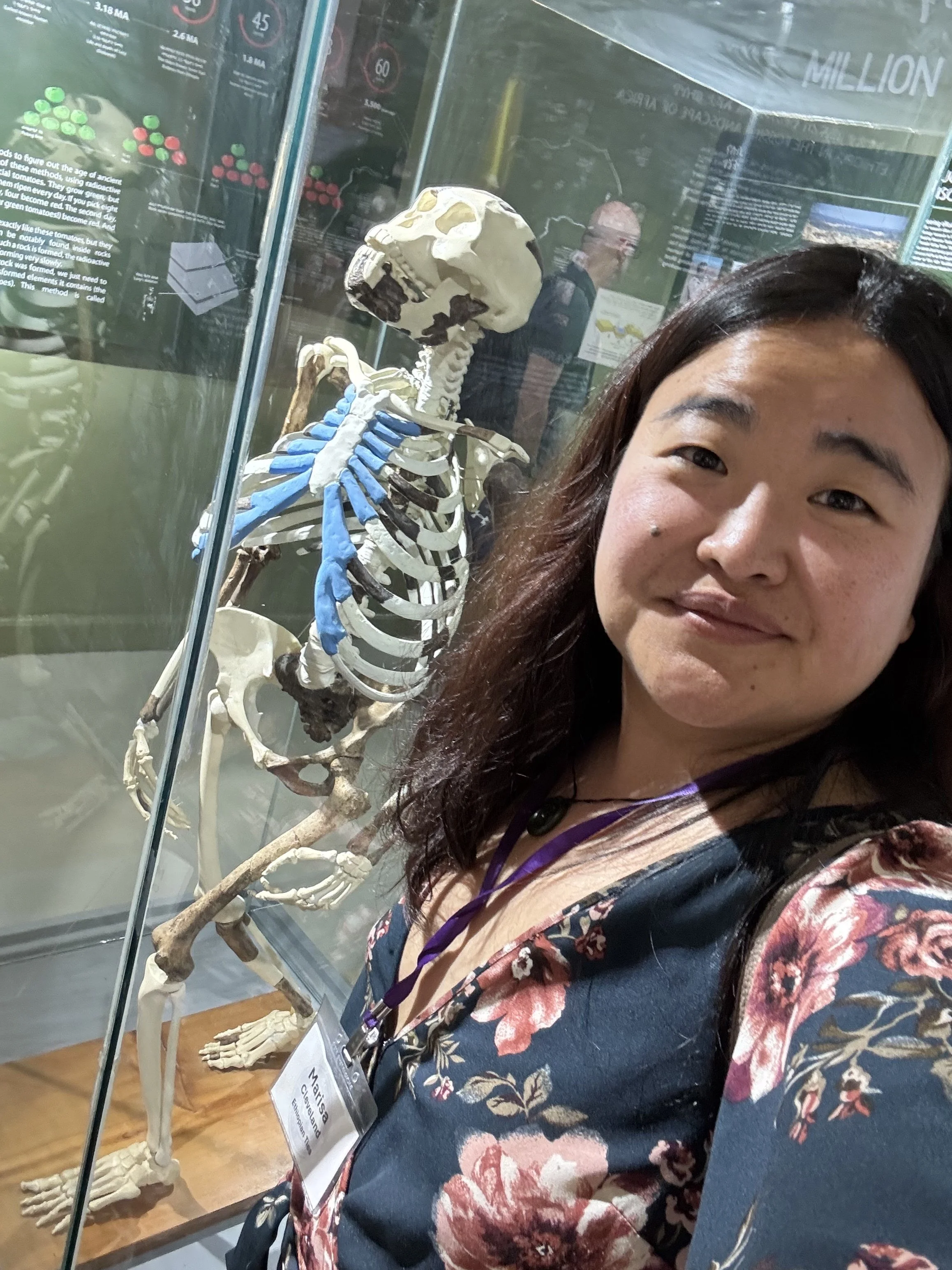
Marisa and a skeleton of Lucy, the “Mother of Mankind.”
On another day, we visited a coffee farm in the Sidama region, a rural area about an hour from Hawassa known for its superb coffee. The regional guide was able to identify the various regions that the adoptees were from based on physical features and regional characteristics. Ethiopia has many distinct tribal communities with their own traditions and identities that are recognizable to those who know what to look for. Adoptees in the group LOVED being seen as part of their tribal community instantly. Being recognized at a more personal, regional level felt even more meaningful. The warmth they received from people we met along the way mattered not only to them, but also to their loved ones traveling beside them. I think it also speaks to the legacy and impact that this kind of trip has for folks. It’s really meaningful and it’s a joy to be able to experience this alongside these families.
One of the most impactful moments I’ve experienced on any Ties trip happened when Tarik and I spent a full day with a young Ethiopian adoptee exploring the details surrounding their adoption story. At one point, a former caretaker rushed from her home to see them, filled with emotion and joy. Seeing the adoptee’s smile in that moment is something I will carry with me. Later in the trip, I needed to explore hotel options for the 2026 trip and the adoptee joined me, just so he could see more of his birth country. That one on one time was special and rare, since larger group trips do not always allow for that kind of space. Those shared hours will stay with me for a long time.
When families plan these kinds of journeys, I’m always struck by how much love and intention surround the process. Adoptees are often supported by loved ones who may or may not travel with them, but who are still actively rooting for them and holding space in meaningful ways throughout the journey. I consistently see loved ones working to center the adoptee’s needs and choices, giving them the freedom to decide what they want to explore and what they would rather not pursue, even when that can be emotionally challenging. On this particular trip to Ethiopia, it was especially powerful to witness how families honored each adoptee’s pace and preferences, supporting them throughout the experience and during their “Uniquely Yours” days, whether that meant participating fully or stepping back when needed.
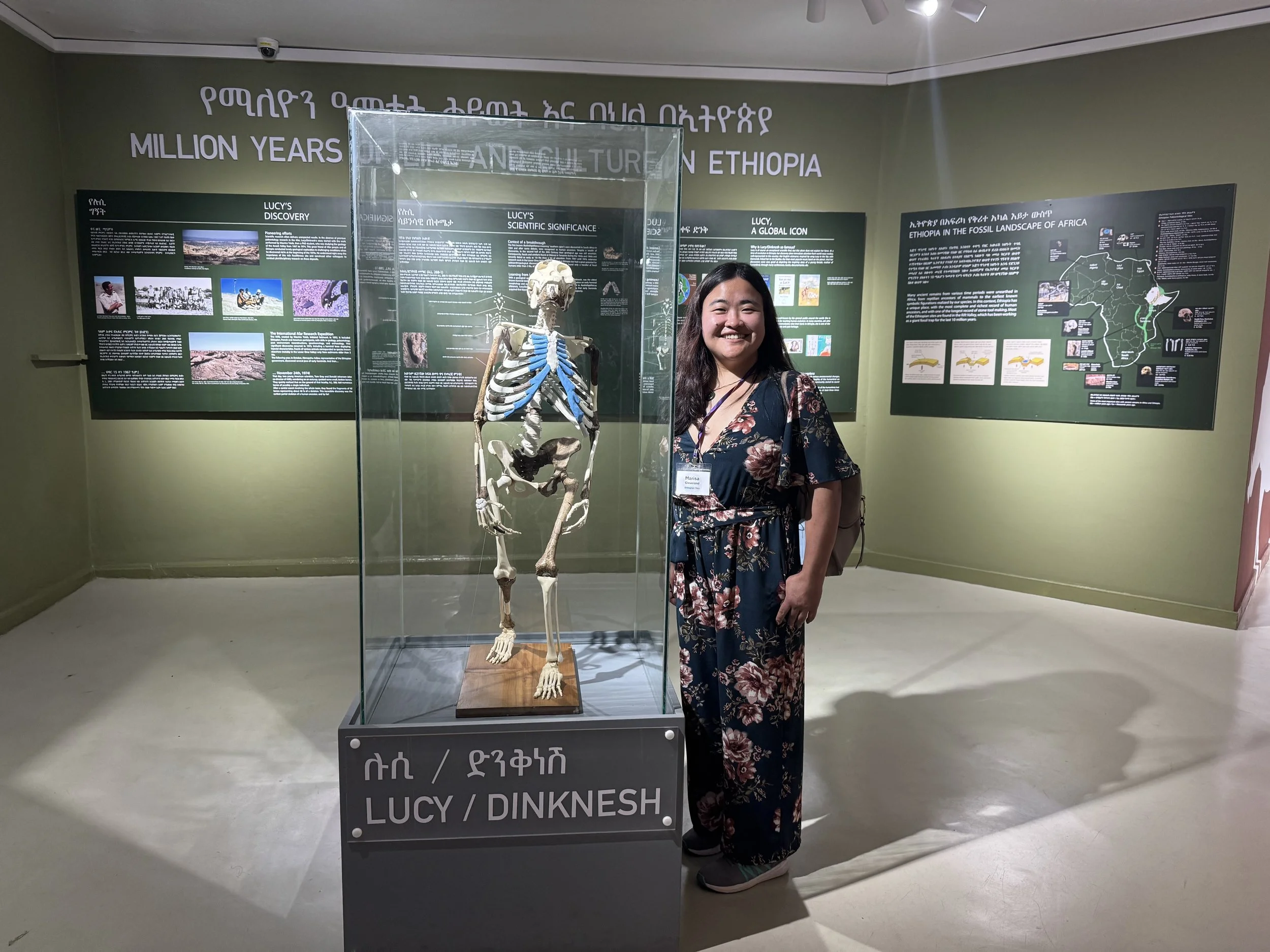
Marisa and a skeleton of Lucy, the “Mother of Mankind.”
On these trips, some adoptees discover a deep love for their birth country, while others come away with a renewed appreciation for their adoptive country. Often, it is both. The same can be true in how they hold their connections to birth family and adoptive family, with space for complexity, gratitude, and growth all at once.
For some, the legacy of the trip is the conviction that they will return one day and build a life there. For others, the legacy lives in the memories they created, the questions they explored, and the connections they strengthened. No two journeys look the same, but each one leaves a meaningful imprint that continues long after the trip ends.
Early Bird Registration for Ethiopian Ties 2026 is now open! Review the itinerary and optional excursions here.
*Connect & Chat is now virtual! Connect & Chat is held monthly for those who have been on a Ties tour, are interested in joining in the future or who just want to be in community with other adoptees and loved ones. Sign up today.