
Kazakhstan Through New Eyes: Reflections from an Adoptive Mother
Sixteen years after adopting their son, Noah, Amelia reflects on their powerful 2025 heritage trip to Kazakhstan with The Ties Program. This blog spotlight details how Ties expertly balanced deeply emotional work with genuine fun and adventure, allowing Noah and other adopted kids to connect in a way that required no explanation. Amelia shares how the experience deepened her understanding of international adoption, replacing initial anxiety with ease and joy.
There are moments you don’t realize will stay with you—until you’re standing in them.
For me, one of those moments happened quietly, without warning, in a place I had been sixteen years earlier.
Last summer Noah and I walked into the baby house where he had lived as an infant. Sixteen years had passed since we were last there. As we stepped inside, the doctor who had cared for him back in 2009 met us at the door—she knew he was coming and remembered him well.
What followed was something I don’t think I’ll ever fully be able to put into words.
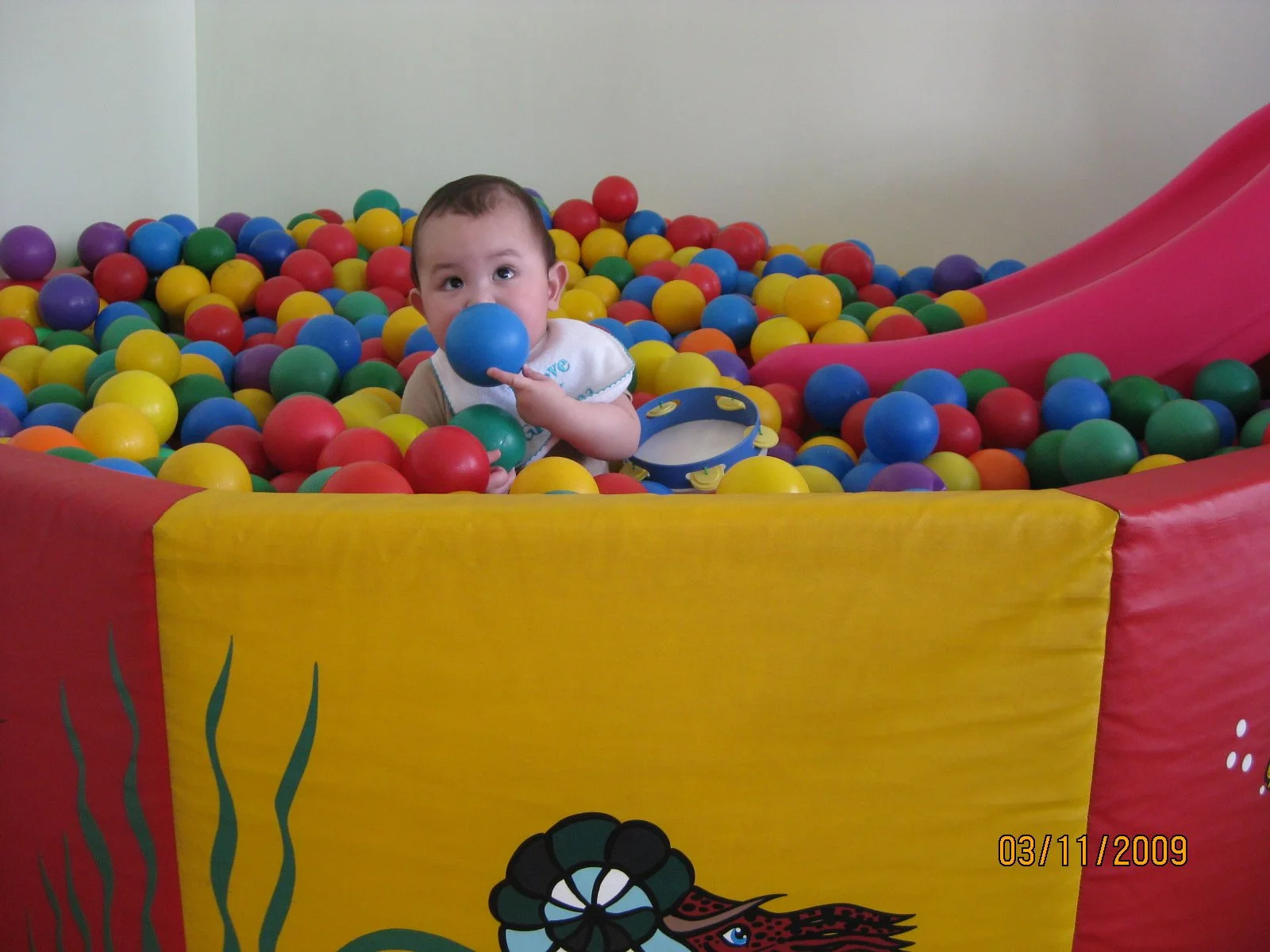
Noah as an infant at the baby house in 2009.
Watching Noah walk through that space—curious, engaged, asking questions, lighting up as he connected pieces of his story—was one of the most powerful experiences of my life. There was an unexpected sense of peace in that moment. Not because it answered everything, but because it didn’t need to.
That moment didn’t happen in isolation. It was part of a much bigger experience—our heritage trip to Kazakhstan in 2025 with The TIES Program.
And what struck me most, pretty early on, was how seamlessly the trip held two very different things at the same time. This was deeply emotional work. And it was also… fun. Like, genuinely fun. Not “we’re trying to make this light because it’s intense” fun. Just actual fun.
I realized pretty quickly that this was going to be different than anything we had done before.
We’ve spent time with other adoptive families over the years—weekends, gatherings, shared experiences—and those have always been meaningful. But this was on another level. By day two, the kids had found each other in a way that didn’t require any explanation. No one needed to tell their story first. There was just an immediate understanding.
“But this was on another level. By day two, the kids had found each other in a way that didn’t require any explanation. No one needed to tell their story first. There was just an immediate understanding.”
And because of that, everything else opened up.
They could just be kids. Running around a new city, exploring, staying out a little too late, figuring out where to eat (which, apparently, sometimes meant waiting an hour at the most popular McDonald’s in Kazakhstan). It was equal parts independence and connection, and it worked.
I remember watching Noah during those early days—completely engaged, laughing, fully present—and thinking, “Okay… this matters more than I expected it would.”
One of the things TIES does exceptionally well is the structure of the experience. There’s a natural rhythm to it: time together as a group, time apart for individual journeys, and then time coming back together again.
That “coming back together” piece is where something really clicked for me.
After spending time revisiting parts of his own story, Noah rejoined the group with a deeper connection—not just to Kazakhstan, but to the other kids. And you could see it. The conversations were easier. The energy was different. There was a confidence there that hadn’t been quite as visible before.
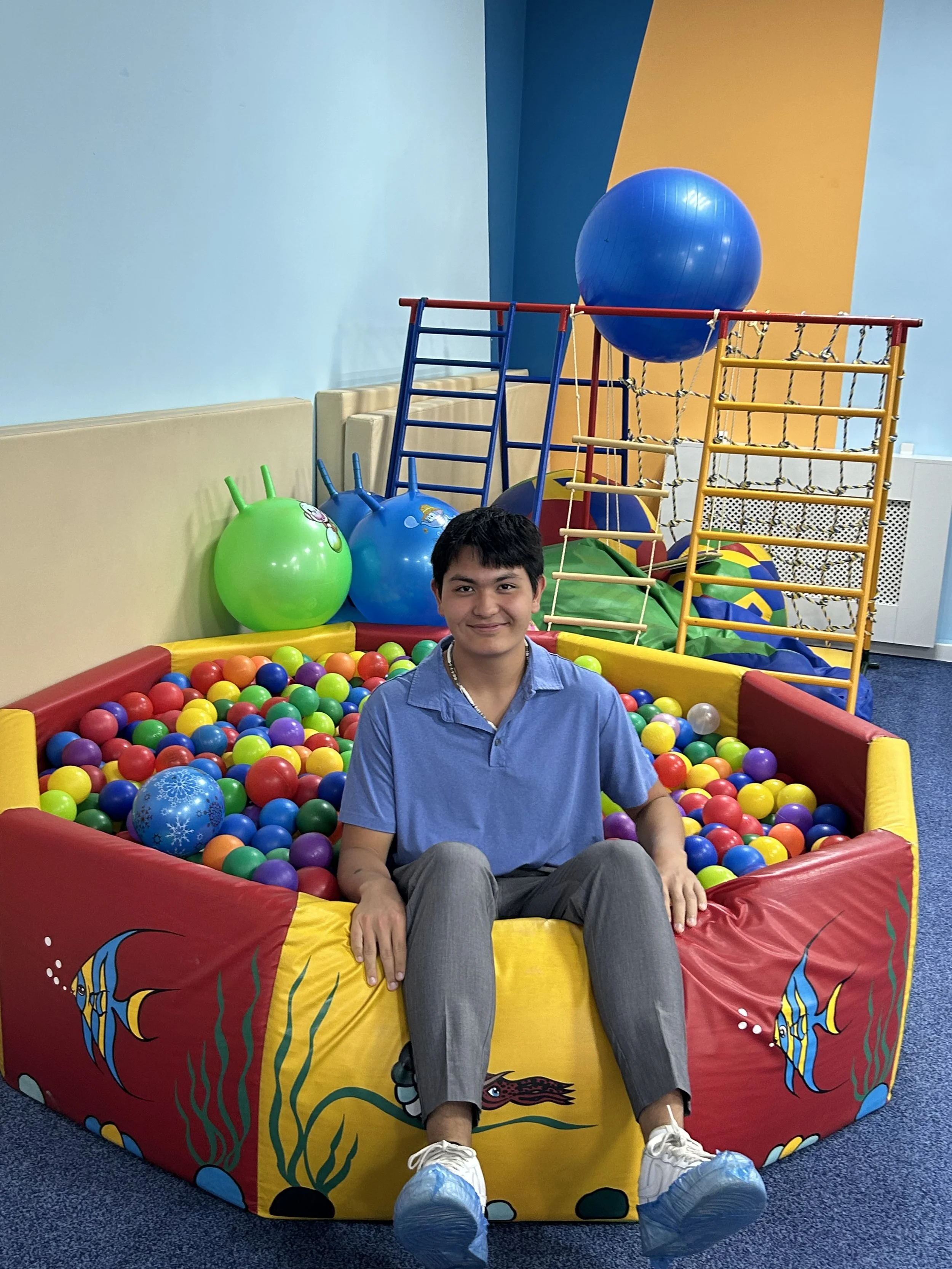
Noah recreating his baby photo in 2025 at the baby house.
Not in a dramatic, heavy way. Just a quiet shift.
As a parent, that’s the kind of thing you hope for but can’t plan.
Of course, there were also the moments that just felt… wildly unique in the best way.
Standing on the steppe holding a golden eagle (still not over that).
Horseback riding across wide open land.
Sitting in a yurt, eating a traditional meal that I’m fairly certain I could not recreate at home no matter how hard I try.
Listening to the dombra, surrounded by music and laughter and a group of people who, just days earlier, were strangers.
These weren’t just “activities.” They were experiences that made the culture tangible in a way that’s hard to replicate anywhere else.
For me, personally, returning to Kazakhstan felt very different this time.
When we came for the adoption, everything was focused on one thing: bringing Noah home. It was emotional, intense, and, at times, overwhelming. There wasn’t space to take in much beyond what was immediately in front of us.
This time, there was space.
We walked the streets. Explored markets. Revisited places from years ago—even recreated a few photos from 2009, which was equal parts meaningful and slightly comical. But instead of anxiety, there was ease. Even joy.
That surprised me.
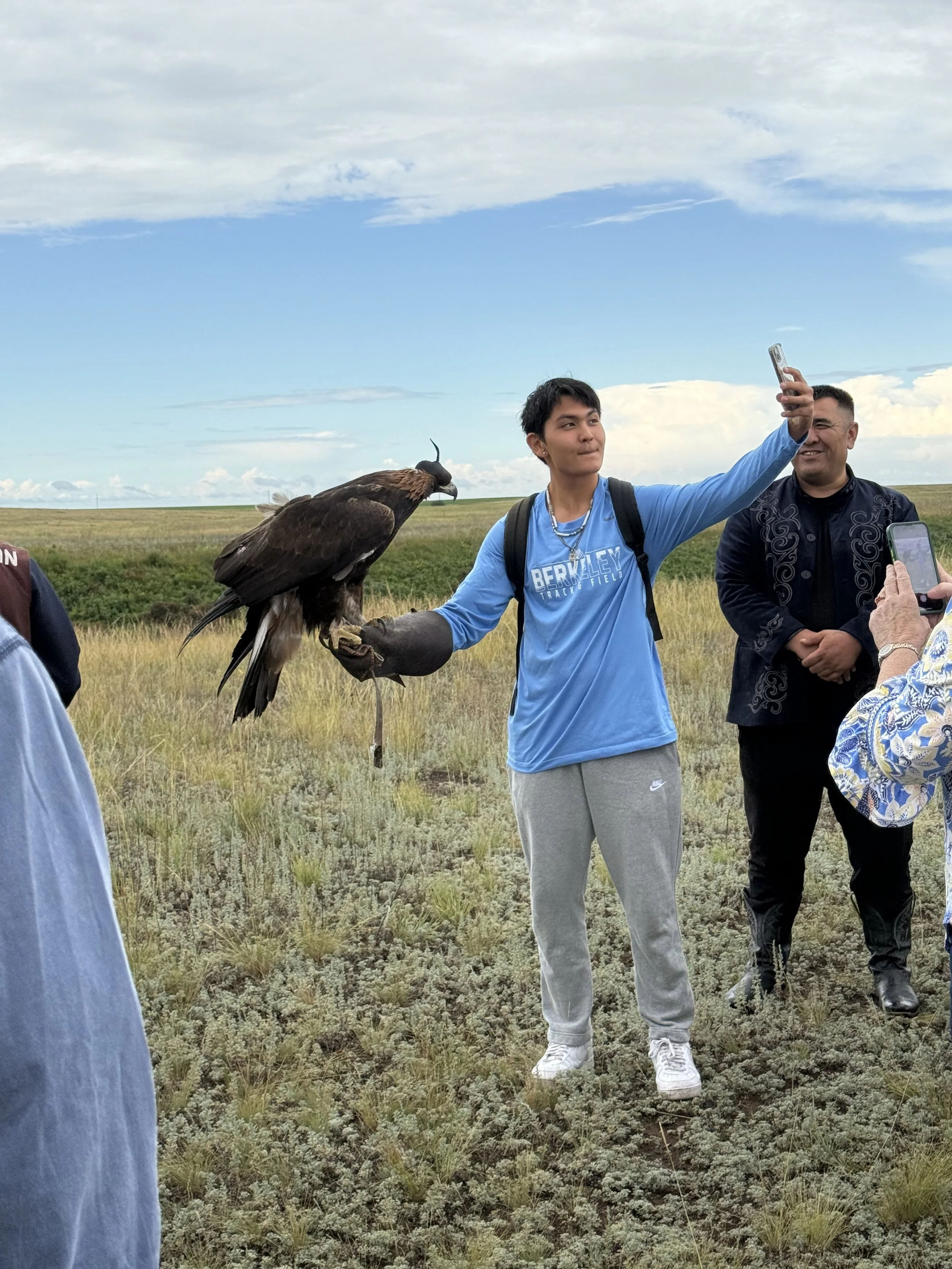
Noah taking a selfie with a golden eagle on the steppe.
I had expected at least some of the old emotions to resurface in the same way. They didn’t. What replaced them was something much lighter—and, in many ways, more meaningful.
One of the biggest takeaways for me was how much this experience deepened my understanding of international adoption.
I thought I understood it. I’ve lived it for years. But being there—experiencing the country alongside Noah, watching the kids connect, sharing space with other families who just get it—added a layer I didn’t expect.
There’s a pull to the land. A connection that exists whether it’s been explored yet or not.
And watching Noah step into that, in his own way and on his own timeline, gave me a new appreciation for what that means long term.
We’ve always celebrated Kazakh culture in our home. But now, it feels different. More grounded. More participatory. Less abstract.
What TIES does so well is create space for all of this to happen without forcing it.
There’s no pressure to have a specific kind of experience. No expectation that every moment needs to be profound. It allows for depth and lightness to coexist—for reflection and adventure to happen side by side.
That balance is what makes it work.
By the end of the trip, something had shifted.
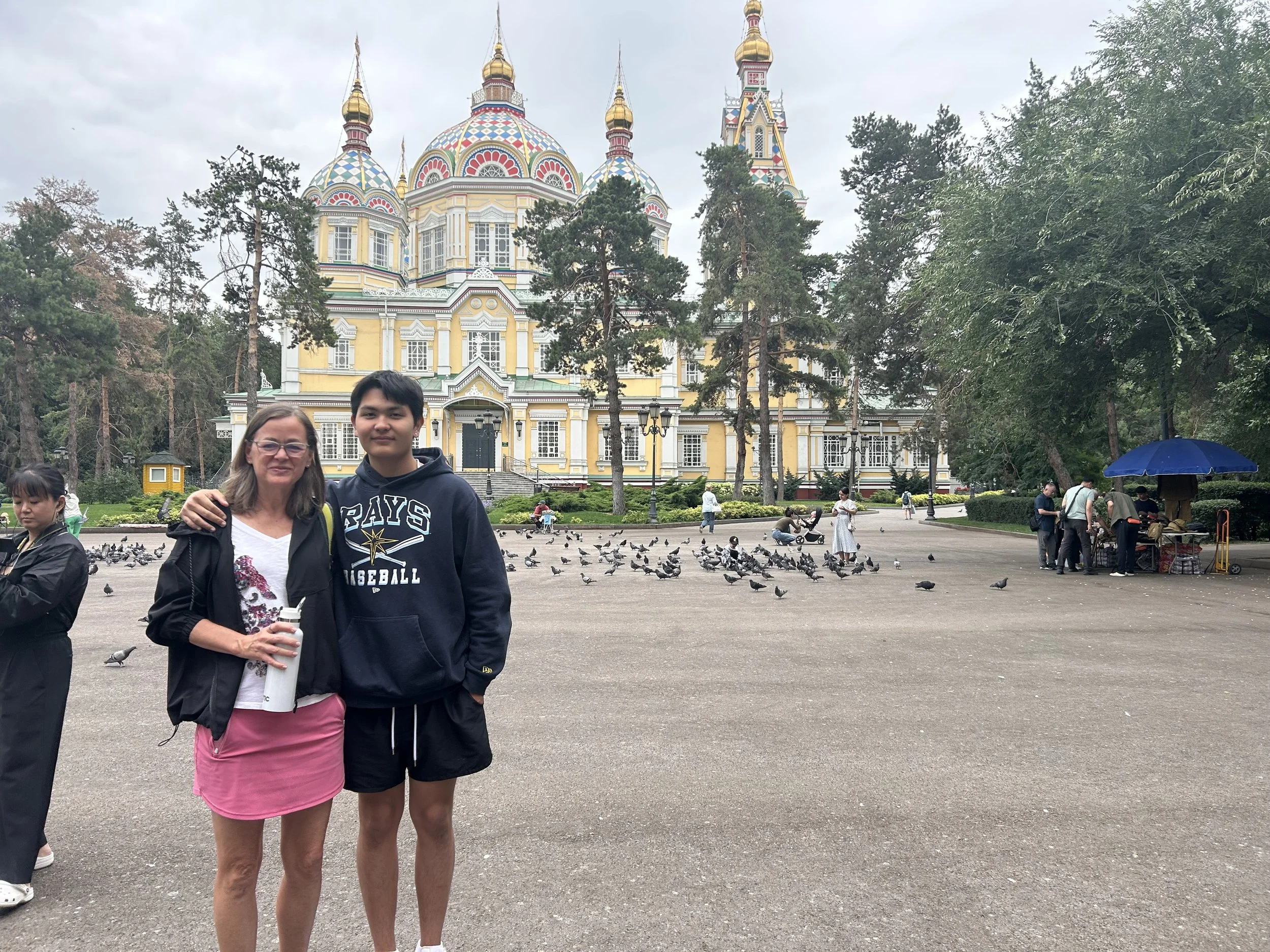
Amelia and Noah pose in front of Zenkov Orthodox Church in Almaty.
Not in a dramatic, everything-is-different-now kind of way. But in a steady, meaningful way that I think will continue to unfold over time.
Noah understood more. He connected more. And maybe most telling—he wants to go back.
In fact, we are.
If you’re considering a heritage trip, my advice is simple: you don’t need to have it all figured out.
You don’t need to know exactly what it will mean or how it will unfold.
You just need to be open to it.
Because some of the most meaningful parts of the experience aren’t the ones you plan for—they’re the ones you recognize only after you’re standing in them.
Feeling inspired? Join the mailing list for Kazakhstan Ties 2027 and experience community, connection and experiences you can’t have anywhere else.