
Five Things Adoptees Should Know Before Traveling to Their Birth Country a Second Time
Been to your birth country before? Your next trip is going to feel completely different and that's okay. 💜 We're diving into what adoptees can expect on return trips: bigger feelings, new perspectives, and the beauty of seeing familiar places with fresh eyes. Featuring real stories from Ties Team Members and alumni, it's an honest and encouraging guide to traveling with an open heart, releasing expectations, and embracing every feeling along the way.
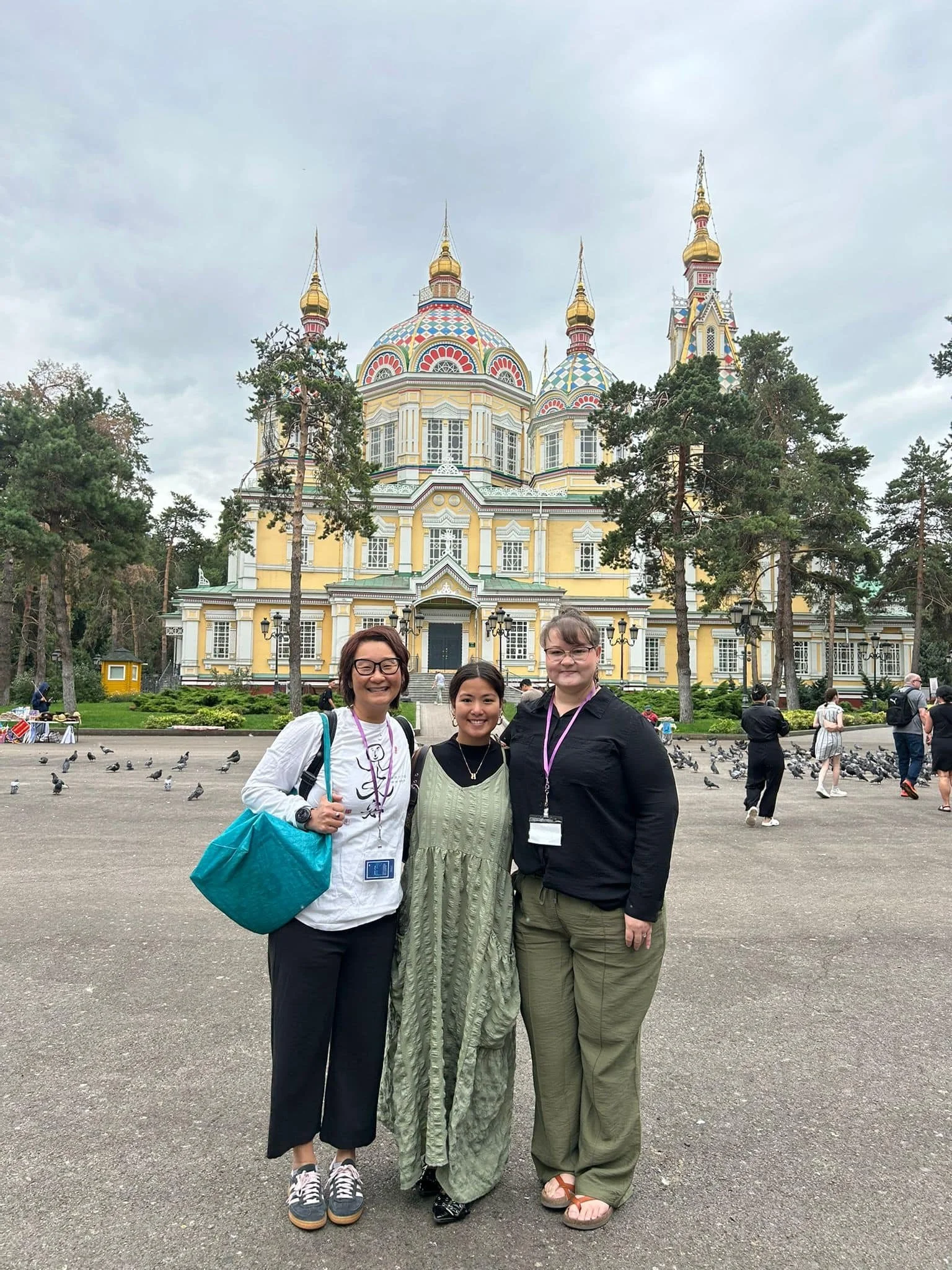
Tanya, left, with Adjunct Team Members Isabelle, and Abby. Tanya and Isabelle have both travelled to their birth countries more than once.
Everything is going to feel different
Even if you have been before, returning to your birth country will never feel exactly the same. You may have had an incredible experience on your first trip, which is what brings you back, and that is something we deeply celebrate. At the same time, it is important to remember that even if you are doing many of the same activities, nothing will be exactly the same. The people, the places, and the moments have all continued to evolve, and so have you.
You will see familiar places through a new lens, shaped by everything you have experienced since your last visit. Instead of expecting a repeat of your first trip, try to stay open to what is new this time, including the connections you will form with a different group of people and the experiences that unfold in unexpected ways. Each return is its own journey, and it is meant to be.
Bigger feelings, deeper processing
Bigger feelings, deeper processing, and a more layered impact are common when returning to your birth country, especially if you are not traveling with your adoptive parents. And those feelings may not mirror what you experienced on your first trip.
You might be thinking you have already done the work to get here. You felt the big emotions, had a meaningful first trip, made lasting friendships, and connected with your Ties group. You got through the hard parts, so this time might feel like it will be easier, lighter, or more straightforward.
The reality is that many adoptees find there is often more processing, more feeling, and more impact on a return trip, not less. That does not mean something is wrong. In the long run, many share that these experiences help deepen comfort with identity and self-understanding, even if the process is not always easy. Adoptees’ experiences are incredibly diverse, and while adoptee loyalty can play a significant role for some, for others it may not feel as present, with no single way it should look or feel.
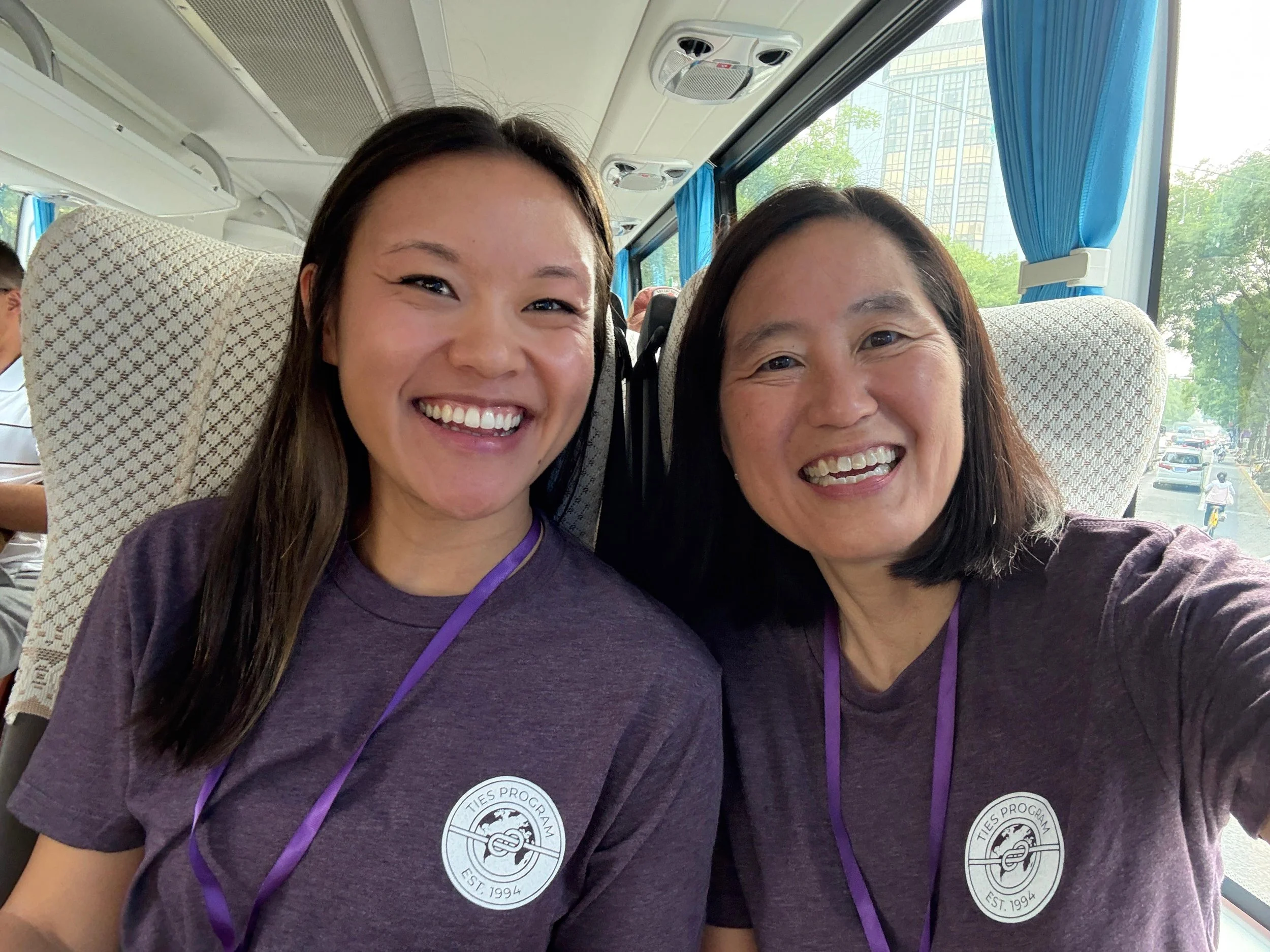
Autumn with Adjunct Team Member, TK. Both have traveled to their birth countries more than once.
Ties co-owner and Korean adoptee Tanya Kaanta reflects on her first two trips back, which were less than a year apart: “I remember the second time I went to Korea, I was more aware of the political and historical aspects behind adoption, and it really opened my eyes and made me realize how nuanced adoption is. There is good, bad, and ugly, and the rhetoric I was told my whole life crumbled. But I was also able to start forming my own opinions without having to worry about adoptee loyalty. When I returned a third time, my perspective changed even more. While I had already lived in Korea and had more experience with the country and culture, this third time back felt even more difficult and emotional.”
Autumn Ackerson, who traveled as a China Ties participant at sixteen and then as an adjunct team member at twenty (and is now our China Ties Program Manager) notes:
“During the China Ties trip, there was a day when adoptees visit the CCCWA (China Centre for Children’s Welfare and Adoption) to review their adoption files. I first experienced this during my Ties trip with my adoptive mother, and at the time I felt fairly indifferent about it.
During my first trip as a travel team member with China Ties, the CCCWA pulled my file again so I could review it on my own while other adoptees and their loved ones did the same. Even though the file contained no new information, something about the experience shifted. Going through it alone, at my own pace, without my mother’s presence or input, changed how I engaged with it.
I still look back on that day as an “aha” moment, the kind many people expect to have on their first trip. For me, it didn’t fully land until I returned to China again. On that later trip, I had more space to sit with my thoughts and process them more deeply.
There is something about returning again that reveals the weight of the experience in a different way, especially when there is less pressure to perform or feel a certain way. Emotions have more room to surface when expectations are lighter. On my second trip, I was simply there as a travel team member, which gave me more space to grow into my feelings and take in the experience in a more honest, unhurried way.”
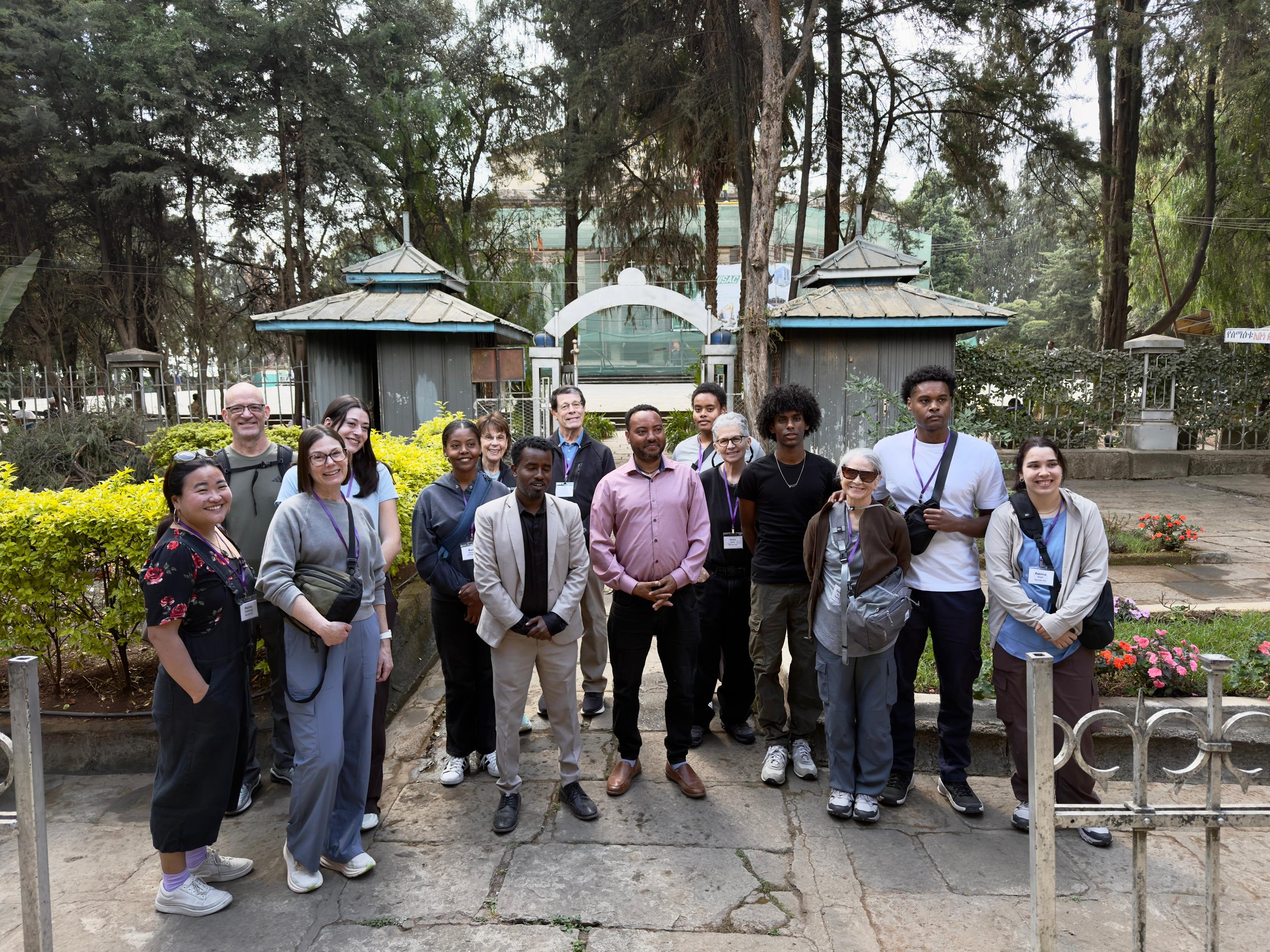
Marisa, far left, with the inaugural Ethiopian Ties tour. Marisa has traveled to her birth country more than once.
You’re still going to stand out.
No matter how fluent you are in the language or how well you align with local fashion and trends, there is often an unmistakable sense of being “from somewhere else” when returning to your birth country. Maybe it’s a twang in your speech, or the way you do your hair, the way you carry your body, or the brands you wear, or even the small details that feel hard to name.
At times, this can feel isolating, especially when traveling alone or without your adoptive family, where there is no visible context to explain why you look or move through the world the way you do. This is part of why we are so passionate about adoptees continuing to travel alongside other adoptees, and why programs like our Guatemala Ties Service and Language Program are intentionally designed around community and shared experience with fellow adoptees and an adult adoptee mentor.
And yet, alongside those moments of difference, there is often deep warmth. Many locals are welcoming, encouraging of cultural and language connection, and recognize the meaning and courage behind the journey of returning.
Marisa Cleveland, a Korean adoptee who first traveled to Korea for two months at nineteen, reflects, “My first trip to Korea I found myself very focused on whether or not I blended in and trying to identify myself in the faces of those around me. I was very hung up on the fact that people would either talk to me in Korean (which I didn’t understand), or immediately clock me as a foreigner and try to speak English. My subsequent trips were all shorter (long layovers) and I was focused on getting out of the airport and trying to find pieces of what I missed the most from my first trip. My most recent trip, as a Ties adjunct team member, I was a lot less focused on if I stood out or not and I didn’t really notice whether they greeted me in Korean or English first.”
Marisa’s experience reflects a gradual shift toward integration. Over time, the focus can move away from trying to blend in or stand out and toward a more grounded sense of self, whether in the country of birth or the place one calls home. For adoptees, this process of integrating identity can be lifelong, complex, and deeply personal.
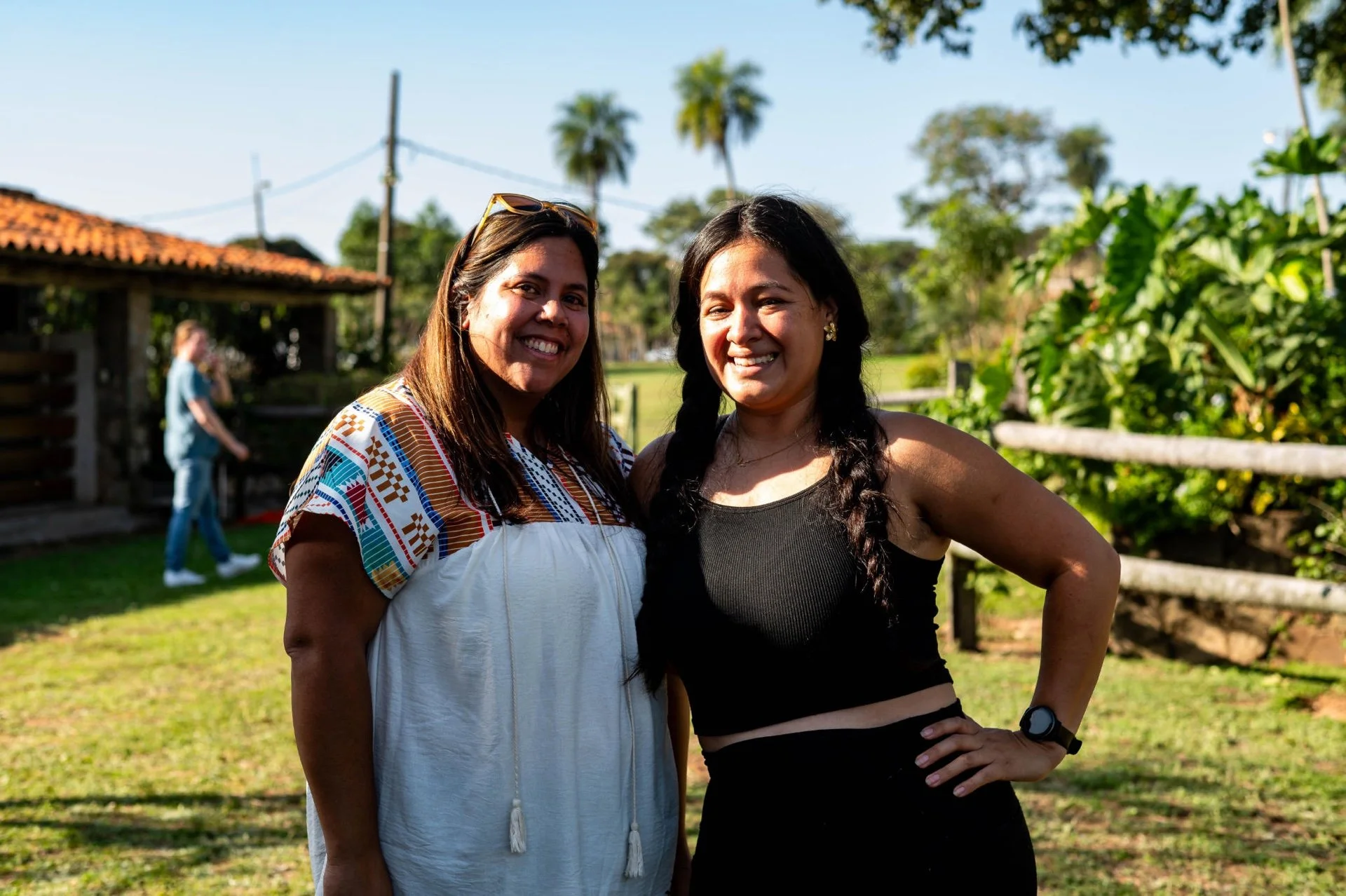
Jessica, right, a Paraguayan adoptee who has traveled to her birth country more than once.
Autumn reflects, “On both occasions when I returned to China, I knew I wouldn’t be able to fully blend in with locals, and I didn’t really try. The second time around, when I had more freedom to explore on my own, like ordering food or using public transportation, I became more aware of how visibly foreign I looked. There is a certain look people give you when they recognize you are not ‘one of them,’ and it is something you learn to navigate over time. Being Asian helped me blend in in some ways, but it also added complexity, because there felt like an expectation for me to belong more fully than I did, and I could sense that tension in those moments. Over time, I learned to become more comfortable with being uncomfortable.”
For many transnational adoptees, there is rarely a place that feels like a perfect fit. There can be a sense of standing out both in the country of birth and in the country they call home, which makes learning to sit with discomfort an important part of the journey.
Tanya also reflects on this experience of in-betweenness when returning to Korea. “In terms of where I fit in, I remember a friend telling me it is like we are part of an adoptee cloud, not permanently part of any group and always floating and changing. And I definitely relate to that.”
Shifting perspectives through culture shock
Culture shock, and even reverse culture shock, can show up in unexpected ways when returning to a place you were born or have visited before. Places change, people change, and you change too. No matter how old you were on your last visit, you are experiencing it through a new lens each time, noticing details and dynamics you may not have seen before.
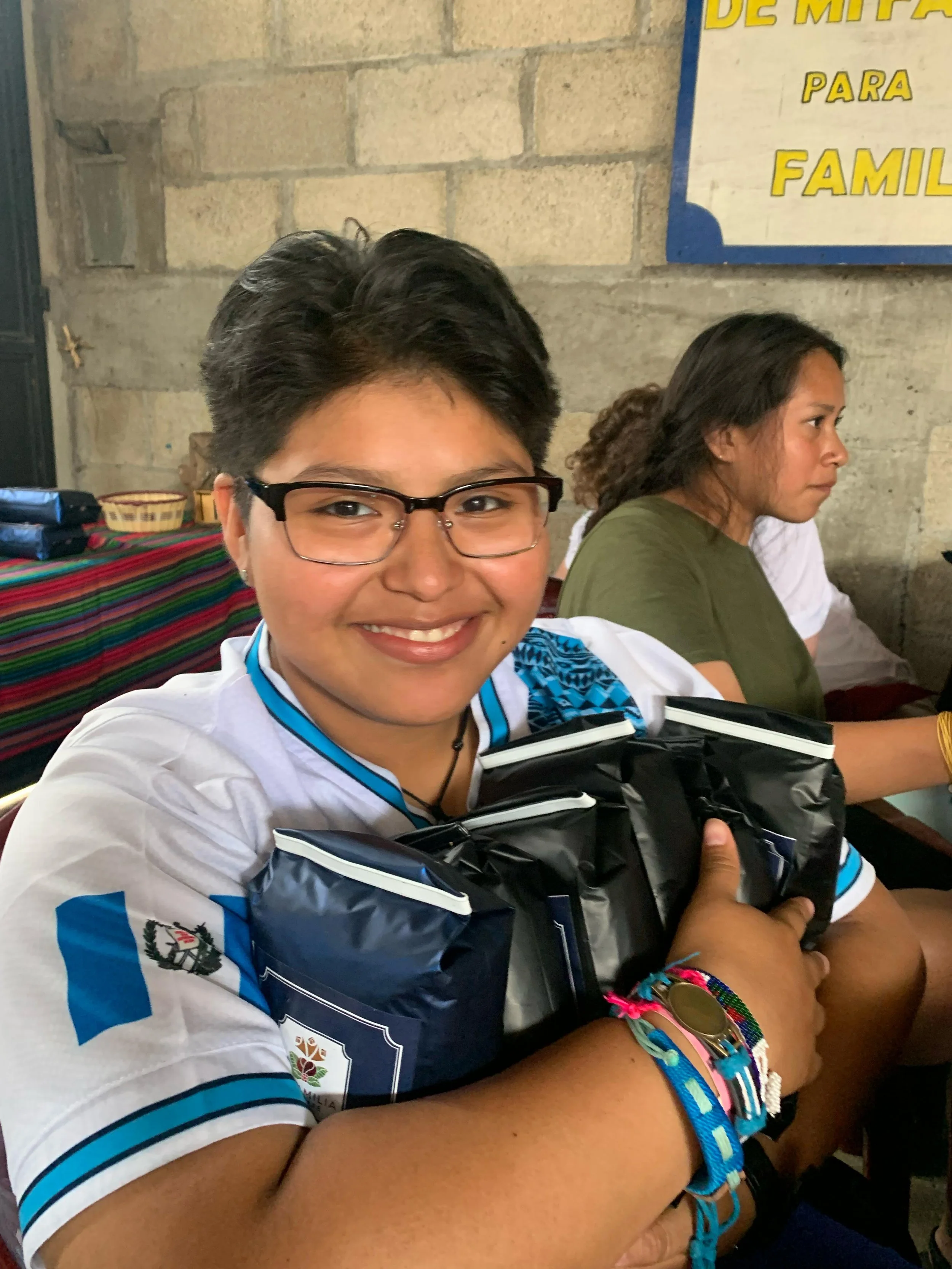
Hazel, a Guatamalan adoptee, who has traveled to her birth country more than once.
Tanya remembers the second time she went to Korea to live and teach: “I thought, this will be so easy and such an awesome experience. I’ve already been to Korea, I know what to expect. I couldn’t have been more wrong. The first time I went, everything felt new and I was in awe. I was supported by my Caucasian friend who was fluent in Korean, and the experience I had was nothing like what it was once I lived there. I quickly found myself moving through emotions I had previously only understood on an academic level. It was still an incredible experience, but also a very emotionally heavy one.”
And chances are, you may experience more significant reverse culture shock upon returning home, especially as you become more immersed in the country and culture of your birth than you were on your first trip. Being aware of this, talking about it with fellow travelers during and after the journey, and recognizing how it may influence your emotions and perspectives can be an important part of processing it. Some people also find it helpful to work with an adoption-competent therapist after returning home.
Even small moments can still land in surprising ways.
Most of us have experienced someone saying we look like a friend or stranger. But hearing something like that in your birth country, especially if you do not have much information about your birth family, can carry a different kind of weight. A passing comment can suddenly open questions about resemblance, connection, and possibility in ways it may not at home.
There can also be moments that challenge expectations in subtle ways. Just because you and another adoptee share a similar background, or even come from the same place, does not mean your experiences or connections will automatically align. Tanya reflects on how significant it felt to learn how to say “I am an adoptee” in Korean, and how something seemingly small became deeply meaningful in that context.
Sometimes the smallest moments become the most profound, and that is a natural and valid part of the experience.
So how do you prepare for these experiences?
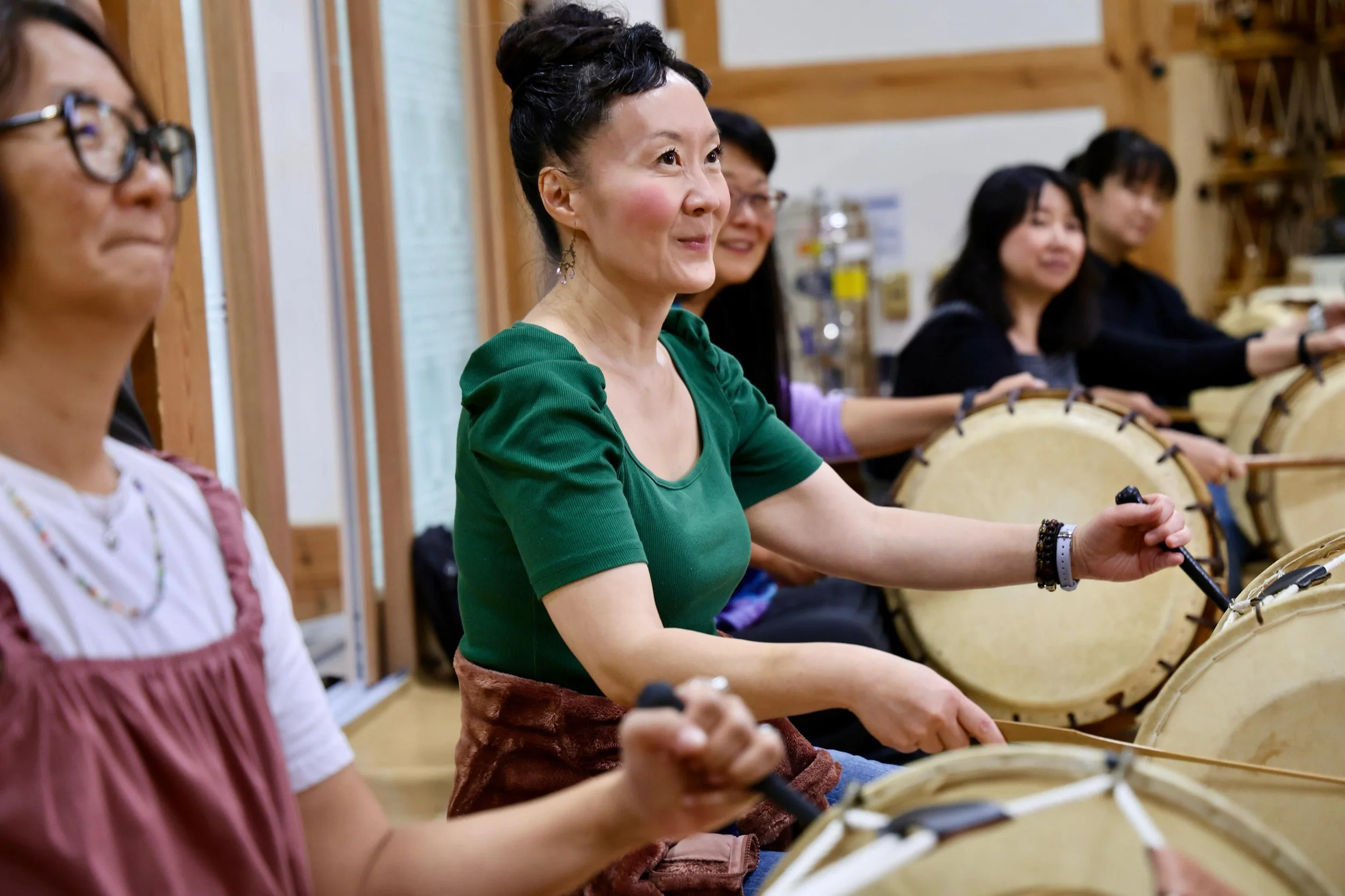
Jae Dell, center, a Korean adoptee who has traveled to her birth country more than once.
Release your expectations and travel with an open heart: It is natural to imagine what returning to your birth country might feel like, especially for adoptees who have been holding this experience for a long time. At the same time, expectations can sometimes shape or limit what we are able to fully receive in real moments, leading to disappointment or missed connection. While it can be challenging, approaching the journey with openness can allow space for experiences to unfold as they are meant to, rather than how we imagine them in advance.
Continue to hone your healthy coping mechanisms: It is normal to encounter moments of frustration, whether it is difficulty communicating, missing home comforts, or feeling emotional in ways you did not anticipate. In those moments, leaning on healthy grounding practices can make a meaningful difference. This might look like journaling, calling someone back home, crying, moving your body through yoga or dance, or sharing openly with fellow adoptees traveling alongside you. Tanya shared that she would often end each day with yoga in her apartment as a way to reset and regulate. These are not just travel tools, but lifelong skills that become especially important in moments of intensity.
Feel those bigger feelings, and give yourself some grace: Emotions that surface during these experiences do not need to be pushed away. Sadness, anger, frustration, or discomfort can all arise, and allowing yourself to feel them without judgment can be an important part of processing the experience. As Guatemalan adoptee and Ties Adjunct Team member Isabel Townsend shares, “Sometimes I get random strong feelings when in Guatemala (anger, hatred, annoyance, irritability, discomfort) and my (adoptive) mom always tells me to give myself a break and have no shame in feeling the way I feel.” Finding ways to feel emotions without turning them inward or outward in harmful ways can help create space to move through them and continue the journey.
Share those feelings with others: Often, what you are feeling is not yours alone. Others may be experiencing something similar or have felt it in the past. Speaking about your emotions can create connection, understanding, and relief. Turning to another adoptee, a member of the team, or an adoption-competent therapist can help you feel supported and also support others in return.
Have fun! While these journeys can hold deep emotion and reflection, they are also meant to be lived and enjoyed. There is space for laughter, lightness, and joy alongside the more complex moments. Letting yourself be present for those moments can be just as meaningful as the deeper processing that happens along the way.