
Returning to China: A Heritage Trip with My Sons
What does it mean to return to a place that holds the beginning of your story? In this heartfelt reflection, Jen Decker-McMillen shares her experience traveling to China in summer 2025 with her two teenage sons, both adopted, with The Ties Program. What began as a long-held intention became a powerful journey of connection, identity, and growth. From initial hesitation to meaningful moments in-country, Jen offers an honest look at what heritage travel can open up—for adoptees and their loved ones alike.
In July of 2025, my sons—ages 15 and 17, both adopted from China—and I had the opportunity to travel on a heritage trip through The Ties Program.
From the moment my boys joined our family, I carried an internal commitment: someday I would help them explore, experience, and understand their birth culture. I knew that meant traveling back to China at some point. The truth is, I had no idea when “someday” would be.
With one son headed into his senior year and the other beginning high school, it suddenly felt like the right window. And if I’m honest, I also wanted something that would connect us during this particular season of their lives.
“I’d Rather Go to Japan”
What surprised me most over the years was that the boys rarely expressed interest in visiting China.
Every now and then I would ask if it was something they might want to do someday. They never seemed opposed—just indifferent. Often the conversation was met with a shrug and something like, “I’d rather go to Japan,” as if I were casually offering free trips around Asia.
But after speaking with a friend who had gone on a heritage trip and encouraged me that “it was time,” I began researching options.
Our adoption agency emailed annually about heritage travel opportunities, and initially I assumed we would go with them. But as I began comparing programs, I realized this trip would be a once-in-a-lifetime investment. I wanted to choose carefully.
After a lot of research, the choice became clear.
Why We Chose The Ties Program
“What set The Ties Program apart for me was how thoughtfully the experience was designed for adoptees”
What set The Ties Program apart for me was how thoughtfully the experience was designed for adoptees. Several elements stood out:
Trips are led by adult international adoptees, bringing a level of empathy and understanding that felt invaluable.
The itinerary intentionally provides time for adoptees and parents/travel companions to process experiences separately.
Visits to adoptees’ home provinces occur in the middle of the trip, allowing time beforehand for preparation and time afterward for reflection.
Program staff travel with the group throughout the experience while also working with local guides in each region.
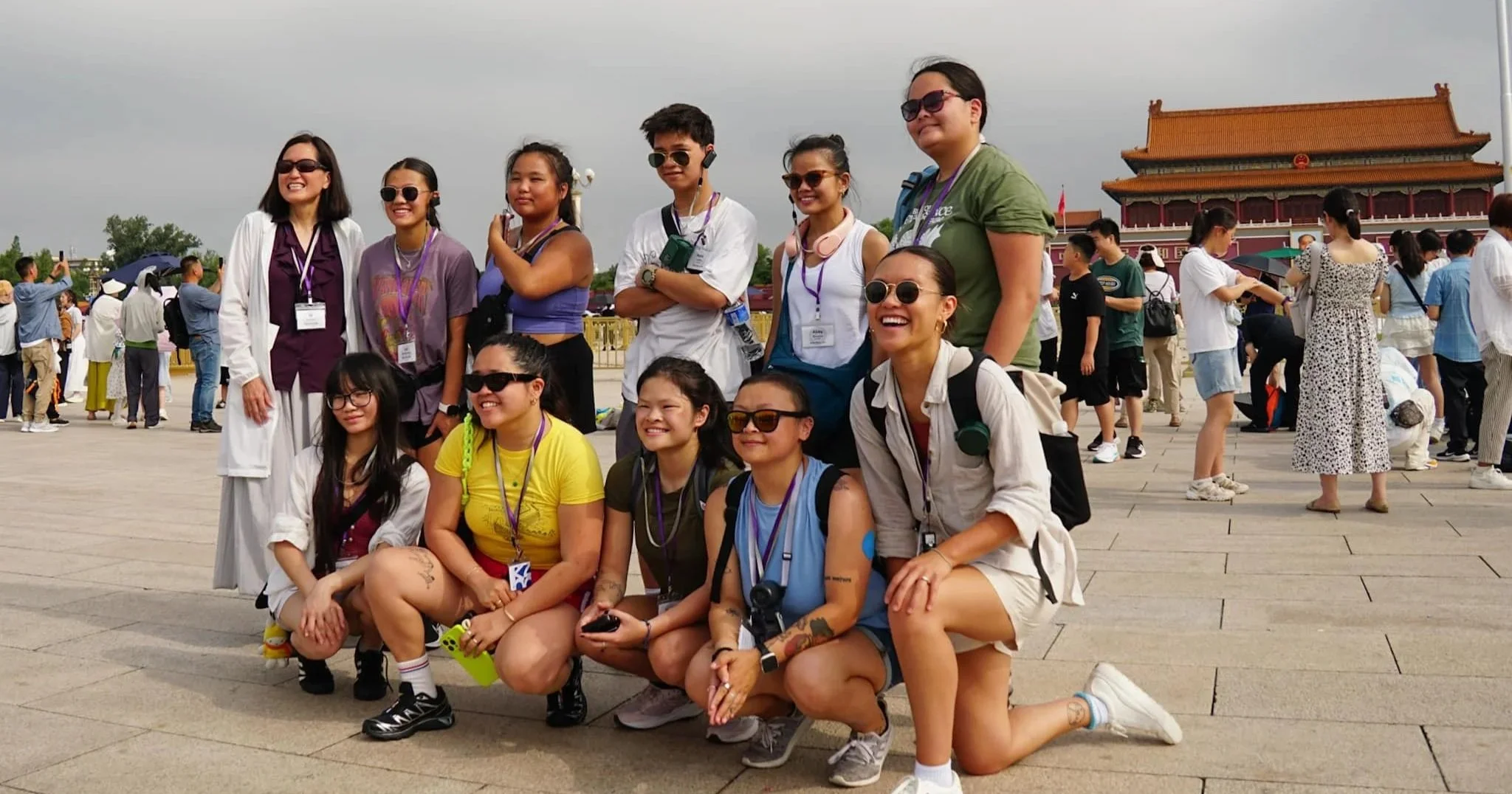
Autumn (front row, far right) and TK (back row, far left) of the Ties travel team with adoptees in Tiananmen Square, China Ties 2025
Many heritage travel options offer the chance to visit a birth province either before or after the group trip and often rely solely on local tour guides. The structure of the Ties program felt far more holistic and supportive.
Once I had made my decision, there was just one step left: convincing the boys.
The Surprise: Immediate Buy-In
I printed the itinerary and travel packet and sat down with them to present the plan—complete with specific dates, destinations, and what the trip would include.
I also prepared them for what they might miss at home, including the Fourth of July and a week of beloved summer camp.
I braced myself for a long conversation full of convincing and persuasion.
Instead, I got near-immediate enthusiasm.
One son was excited about the prospect of eating his way through China (which he absolutely did). The other simply said, “This is important. We should do it.”
Apparently, the idea of a vague “someday trip to China” had felt too big and abstract. Seeing a concrete itinerary—knowing exactly where we would go and what we would do—removed the uncertainty and allowed them to look forward to it.
Preparing for the Journey
Once the decision was made, preparation began in earnest.
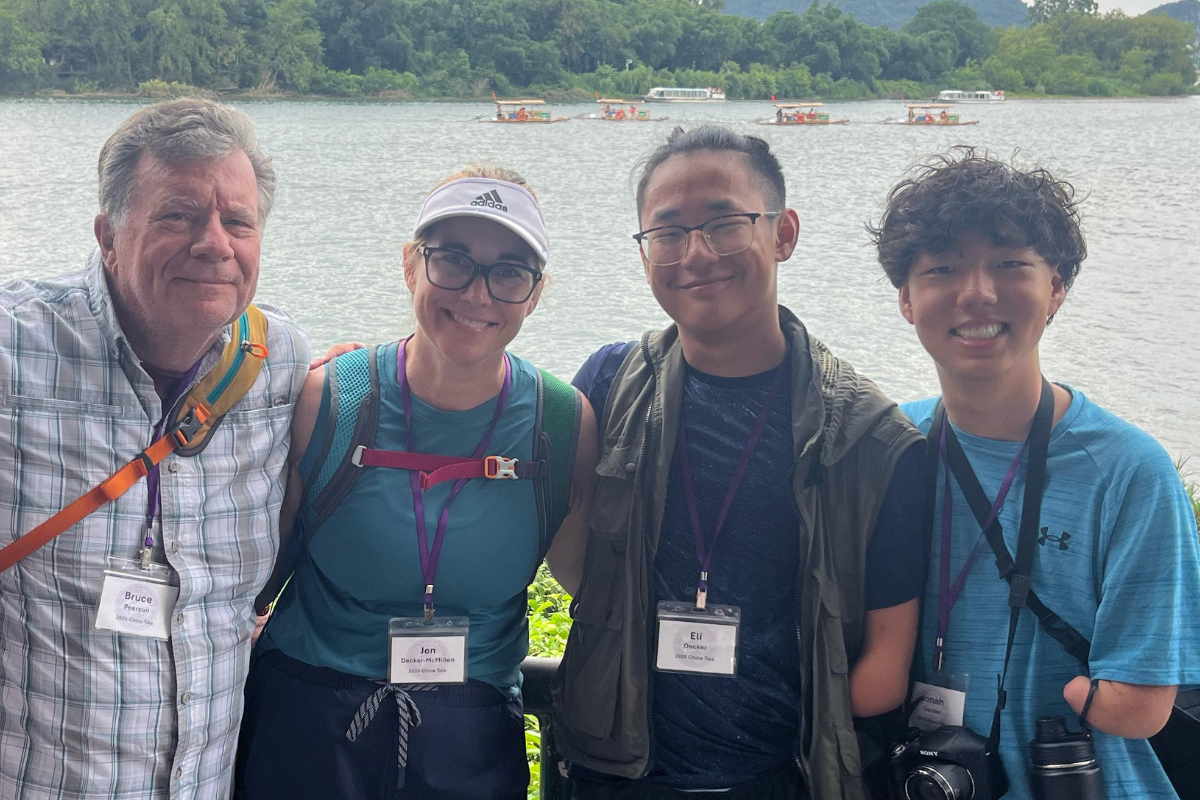
Jen’s dad, Bruce, Jen, and her sons, Eli and Jonah on the Li River
We consulted with the program manager of the program, began budgeting for the financial investment (which was considerable), and gathered every piece of adoption documentation we had. The Ties team used that information to begin preparing the deeply personal portions of each boy’s trip.
Then came the logistical tasks: making sure our passports were current, applying for travel visas, and working through the recommended packing lists.
We also invited my dad—75 years old—to join us. He had traveled with us years earlier for one of our adoption trips, so it felt meaningful to include him in this return journey.
Heritage Trips vs. Adoption Trips
One of the things I came to understand more clearly is how different a heritage trip is from traveling to a country to adopt.
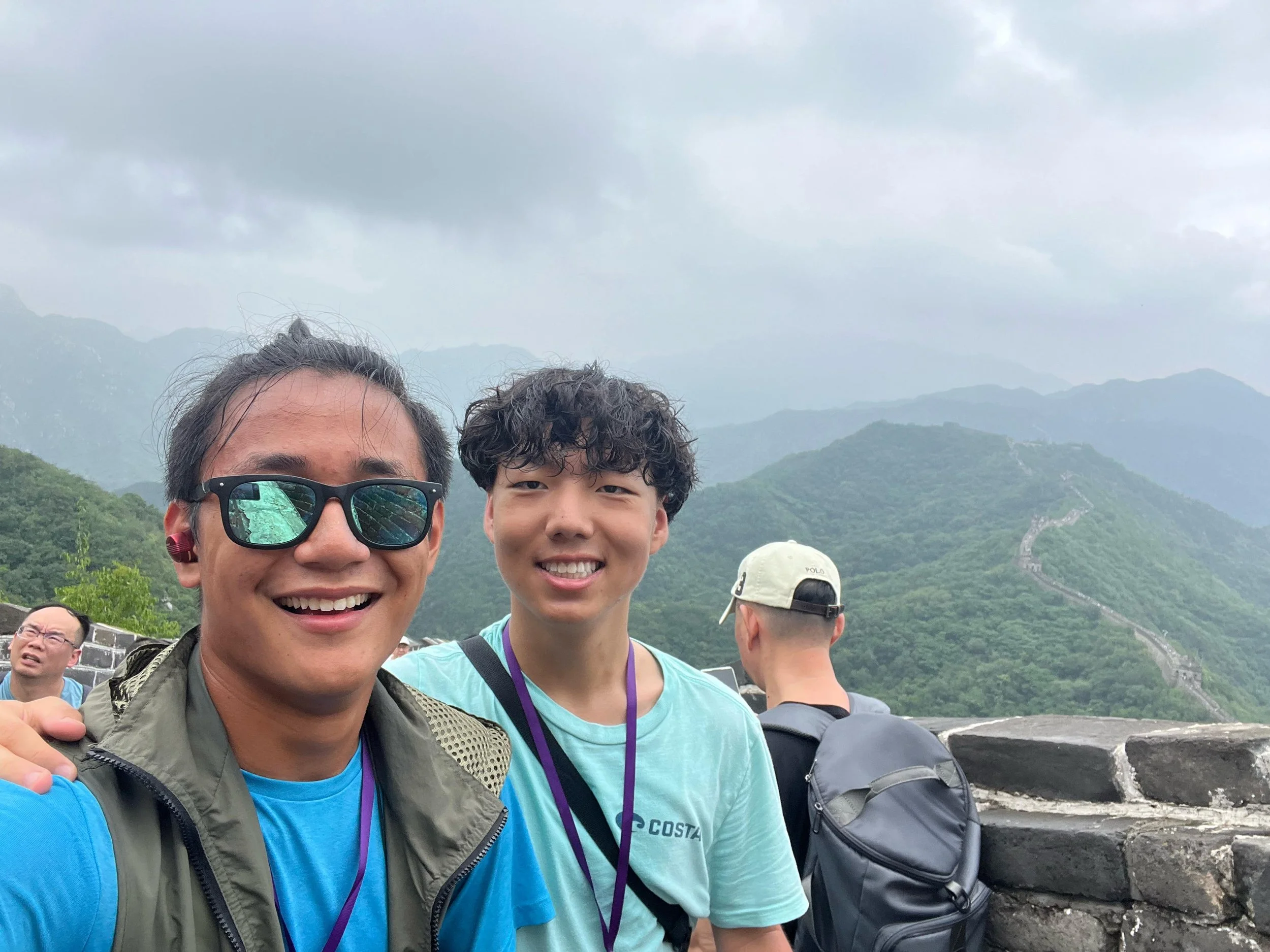
Jen’s sons, Jonah and Eli, climbing the Great Wall together, reaching the highest point.
When families travel internationally to bring home a child, the purpose of the trip is singular: safely completing the adoption and helping the child begin their transition into the family. A child’s physical and emotional well-being becomes the sole priority, while navigating complex paperwork, legal steps, and international travel.
There is very little space to absorb the culture around you.
And the children themselves are often very young and navigating trauma, grief, and enormous life changes. It simply isn’t the moment for them to experience and process their birth culture.
A heritage trip is entirely different. It creates space for adoptees—often for the first time—to explore their birth country in a thoughtful and supportive way.
Watching My Boys Step Into Their Story
We all came home with a deeper appreciation for China and a more grounded understanding of our stories.
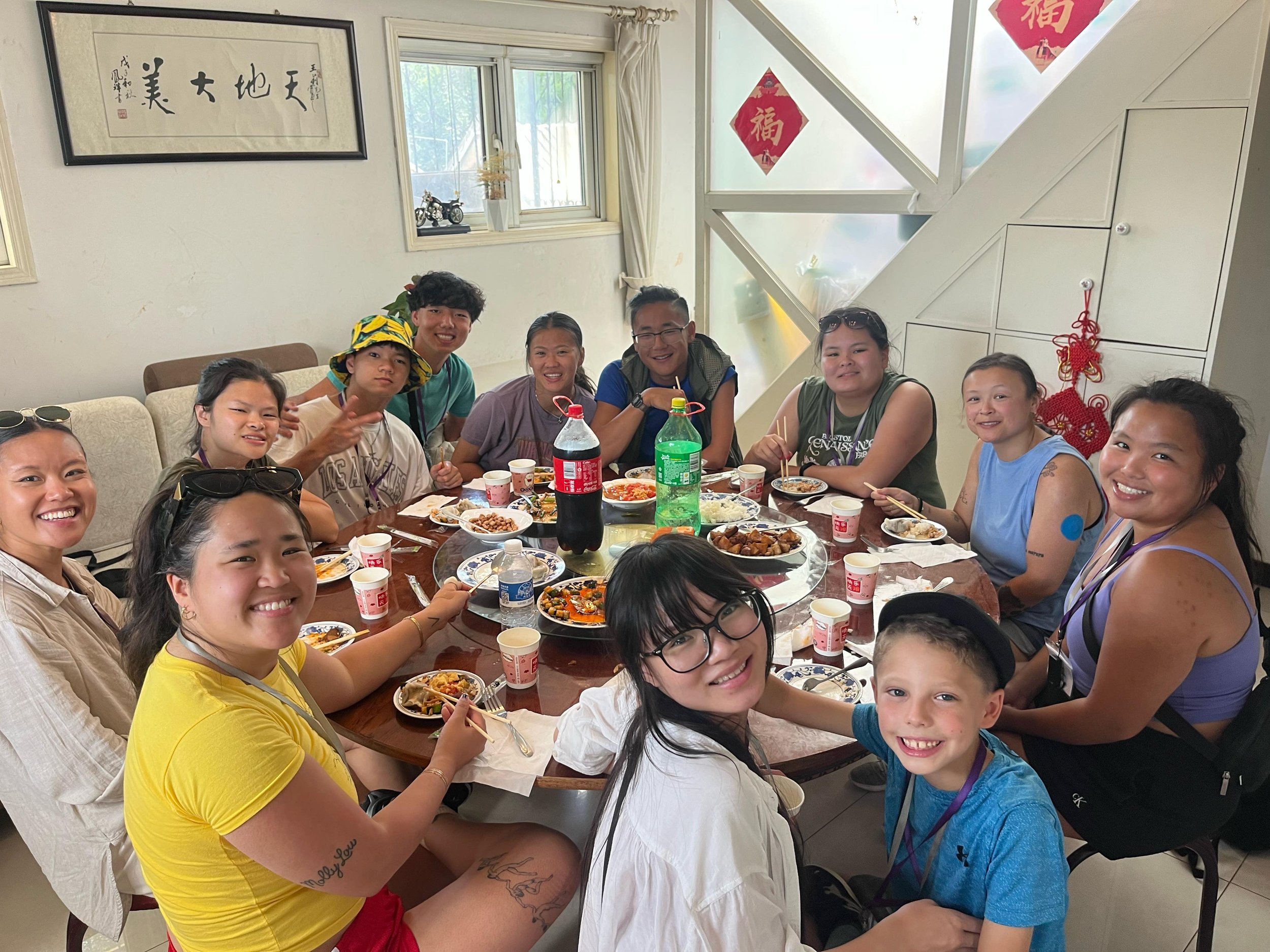
Adoptees from China Ties 2025 enjoying lunch together.
For me, one of the most powerful moments was watching my sons bond with the other adoptees in their birth country. That connection was something special.
The group on our trip included twelve adoptees ranging in age from 15 to 31, along with their travel companions. Seeing my boys share the experience with others who understood their story in a unique way was deeply meaningful.
Even though their individual portions of the trip were very different, they experienced it together—and that shared journey mattered.
I also watched my boys carry themselves with a new confidence and peace, holding their identities and histories with strength and grace.
Even now, writing this, it still makes me tear up.
An Invitation, Not an Ending
One important thing I learned in preparation for the trip is that heritage travel isn’t about finding every answer.
It’s an invitation.
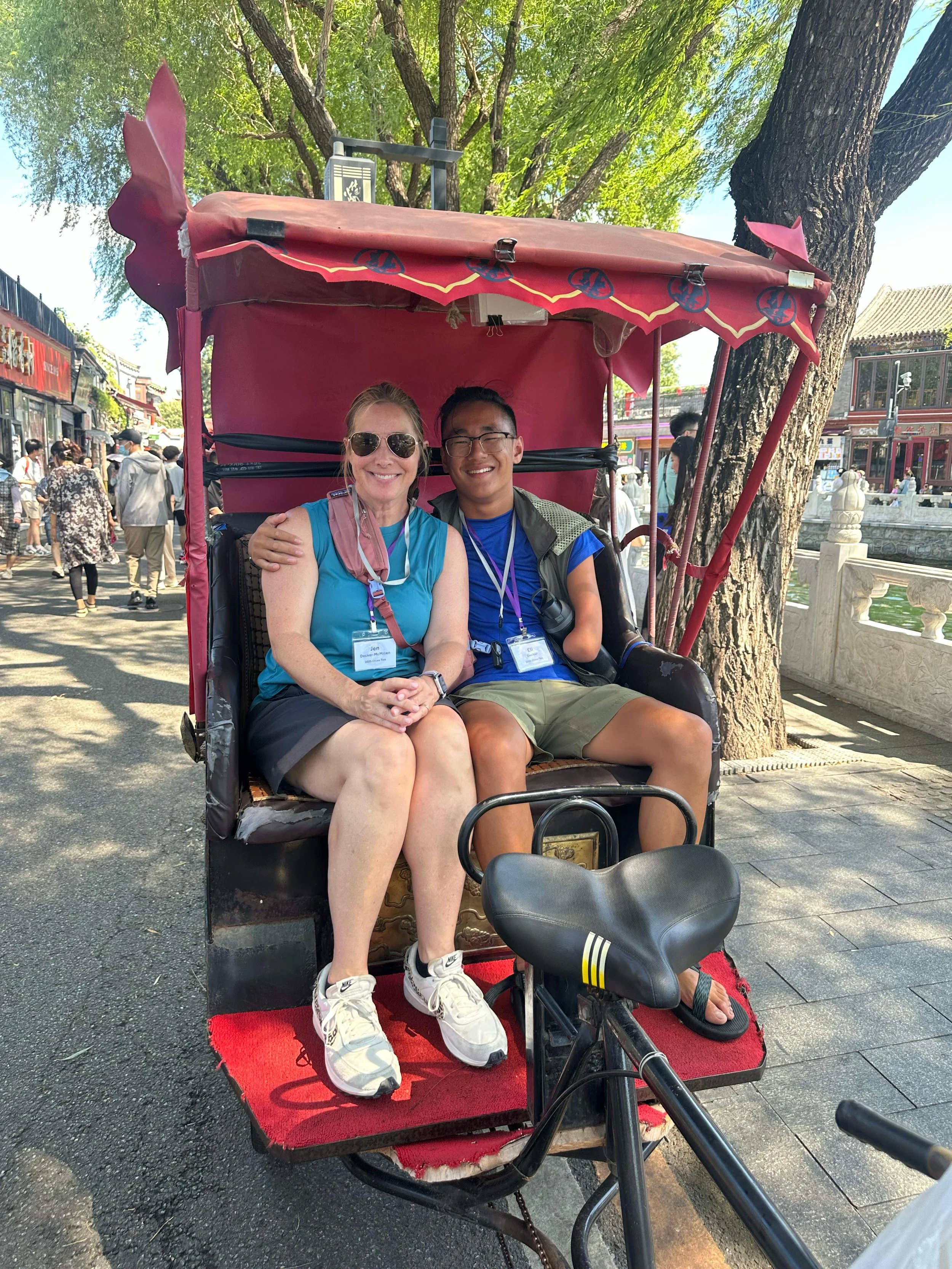
Jen and her son Eli in a rickshaw in Beijing.
An invitation to explore, to be curious, and to begin assembling pieces of one’s story.
For some adoptees, the experience may feel like closure. For others, it may become the beginning of a deeper search. Both are valid.
What matters most is that, for many adoptees, this may be the first opportunity to have ownership in their adoption journey.
After all, adoption involves a series of life-altering events that adoptees themselves never chose: losing birth parents, leaving their birth country, losing connection to language and heritage, and being placed in a completely new family and culture.
A heritage trip may be the first time they are invited to participate in the journey—to ask questions, explore their past, and decide for themselves how much they want to know.
Some participants on our trip chose not to visit their birth province. Others pursued deeper searches.
Both choices were honored. That autonomy is powerful.
About the Money
Much like adoption, heritage travel is a significant investment and one that requires intentional preparation. For our family, this was a considerable amount of money to spend on a two-week trip. Between the program fees, international flights, passports, visas, and travel expenses, it is not something most families can do on a whim.
But I also knew this was not simply a vacation.
A heritage trip is an investment in identity, understanding, and connection. It is an opportunity for adoptees to stand in the place where their story began and to experience their birth culture in a meaningful and supported way. That kind of opportunity is difficult to put a price tag on.
“A heritage trip is an investment in identity, understanding, and connection. It is an opportunity for adoptees to stand in the place where their story began and to experience their birth culture in a meaningful and supported way. That kind of opportunity is difficult to put a price tag on.”
Like many families considering something like this, I had to plan carefully. We budgeted, saved, and made financial choices that allowed us to prioritize the experience. I also reminded myself that the window for something like this is relatively small. Teenagers grow up quickly, schedules become more complicated, and the season when they might be willing to take a journey like this with their parent does not last forever.
For families considering a heritage trip, it can also help to know that some programs offer scholarships or financial assistance, and many families plan ahead by saving over time or inviting extended family members to contribute in meaningful ways. Like adoption itself, the path to making it possible often looks different for every family—but with intention and planning, it can become achievable.
In the end, I came to see the cost in the same way I had once viewed adoption itself: not simply as an expense, but as an investment in my children’s lives and futures.
And now, having experienced it, I can say without hesitation that it was worth every bit of the investment—because I watched my boys stand in the place where their stories began and carry that experience forward with strength, confidence, and peace.
A Journey Worth Taking
If someone asked whether I would do this trip again, my answer would be simple: absolutely.
Not because it answered every question—but because it opened doors, created space for reflection, and gave my boys the opportunity to engage their story in a way that was entirely their own.
Even though our birth and early life stories may differ, one truth holds: knowledge is powerful. Sometimes simply standing in the place where your story began can offer a sense of grounding that words cannot.
Join Us in China!
This summer and fall, join us on our China Ties trips—heritage experiences designed for international adoptees and their loved ones to explore, reflect, and connect with culture, history, and each other. From visiting local communities to engaging in meaningful cultural experiences, these trips provide a space to pause, discover, and deepen your sense of belonging.
Note:Summer trip registration closes April 1, so don’t wait to secure your spot! Visit our trip page to learn more, request info, or register today.
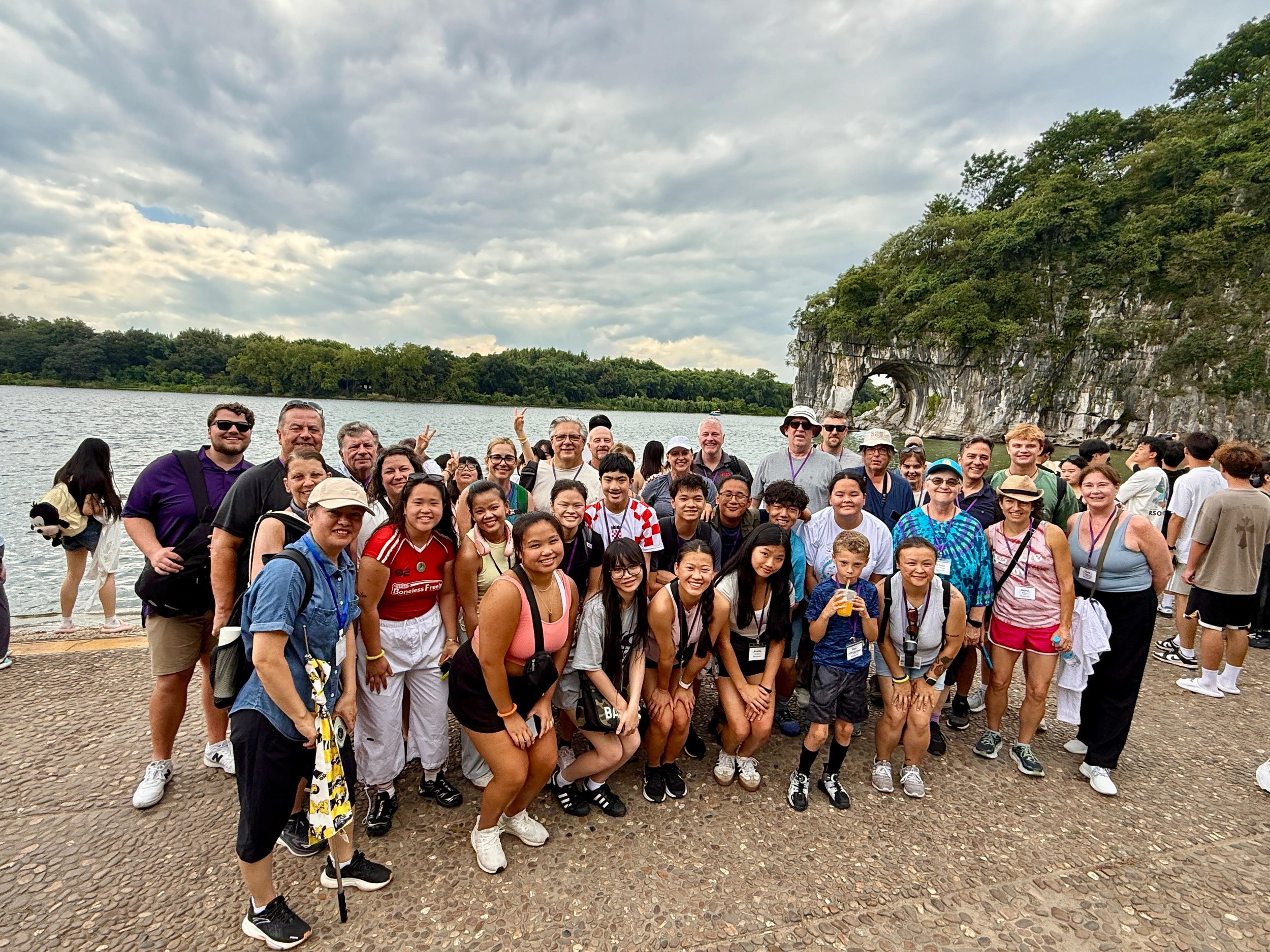
China Ties 2025 at Elephant Trunk Hill in Guilin.