
Ties Traveler: Meet Liz
Today we welcome Liz Sevigny (they/them/她) to the Ties blog. Liz is a Chinese adoptee from Yueyang in Hunan Province and a participant in our inaugural China Ties Adult Adoptees Age 21+ heritage journey. Now based in Maine, Liz shares reflections on returning to their birth country and traveling alongside fellow adult adoptees.
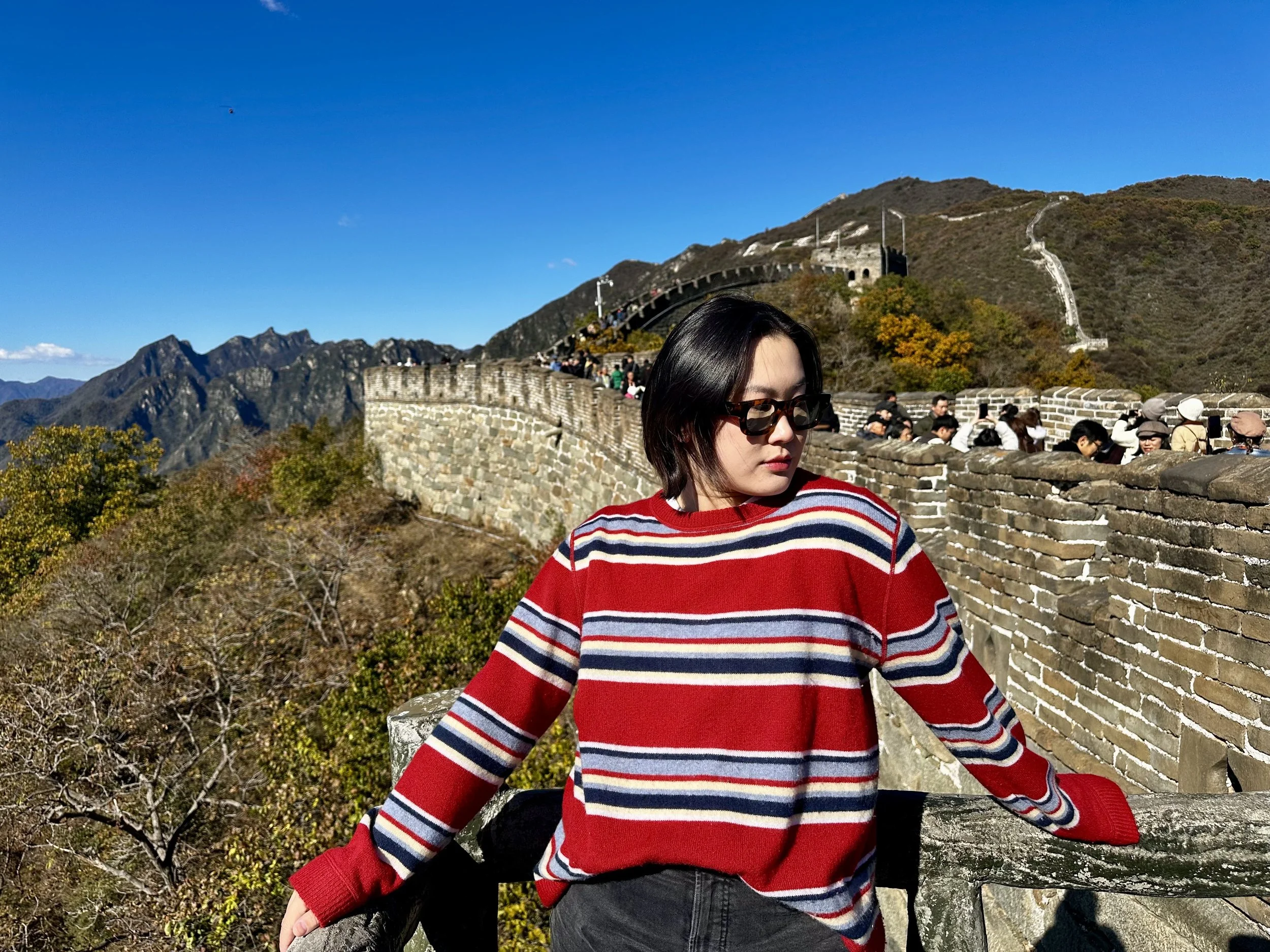
Liz at the Great Wall of China.
Every journey begins with a sense of self. To start, we invited Liz to answer a question that opens the door to their story: What are a few things that make you you?
I would describe myself as an avid learner who lives for community building. I grew up in a small city without many people of color, so I felt alienated for much of my childhood. In lieu of community, I pursued knowledge and experience. I tried anything I could, although focusing on the things I thought colleges liked to see, which led to my many interests in adulthood.
My main areas of interest are East Asian history and culture, volleyball, education, and leadership development. I am a part-time graduate student, working in tech, and volunteering where I can. I love trying new restaurants, attending community events or workshops, or learning and practicing languages.
My communities are very important to me–being able to come together around a shared identity is so enriching.
How do you usually describe your adoption story, if at all?
“Meeting other adoptees with similar backgrounds—transracial, internationally adopted, and specifically transracial, Chinese adoptees—grounded my experiences in ways I hadn’t expected.”
I always knew I was adopted. Growing up, it was simply a fact of my life—something I understood on a surface level but hadn’t yet grasped in its full complexity.
That changed in high school. Suddenly, I became acutely aware of the comments:
“Are you an international student?”
“Where are you really from?”
as if being from the United States wasn’t a possibility for someone who looked like me. Random students would call me “Ling Ling,” despite my simple, legal, English name. These moments made me conscious, for the first time, of what it meant to be a transracial adoptee.
Late in high school, I began reflecting on my birth family and how much their absence made my identity feel incomplete, less whole. I took a DNA test, and in the back of my mind, I was always wondering what it would mean to be reunited with them. Coming to terms with my identity became increasingly important to me. In a racialized America, not having those answers left me feeling like I existed in some sort of limbo.
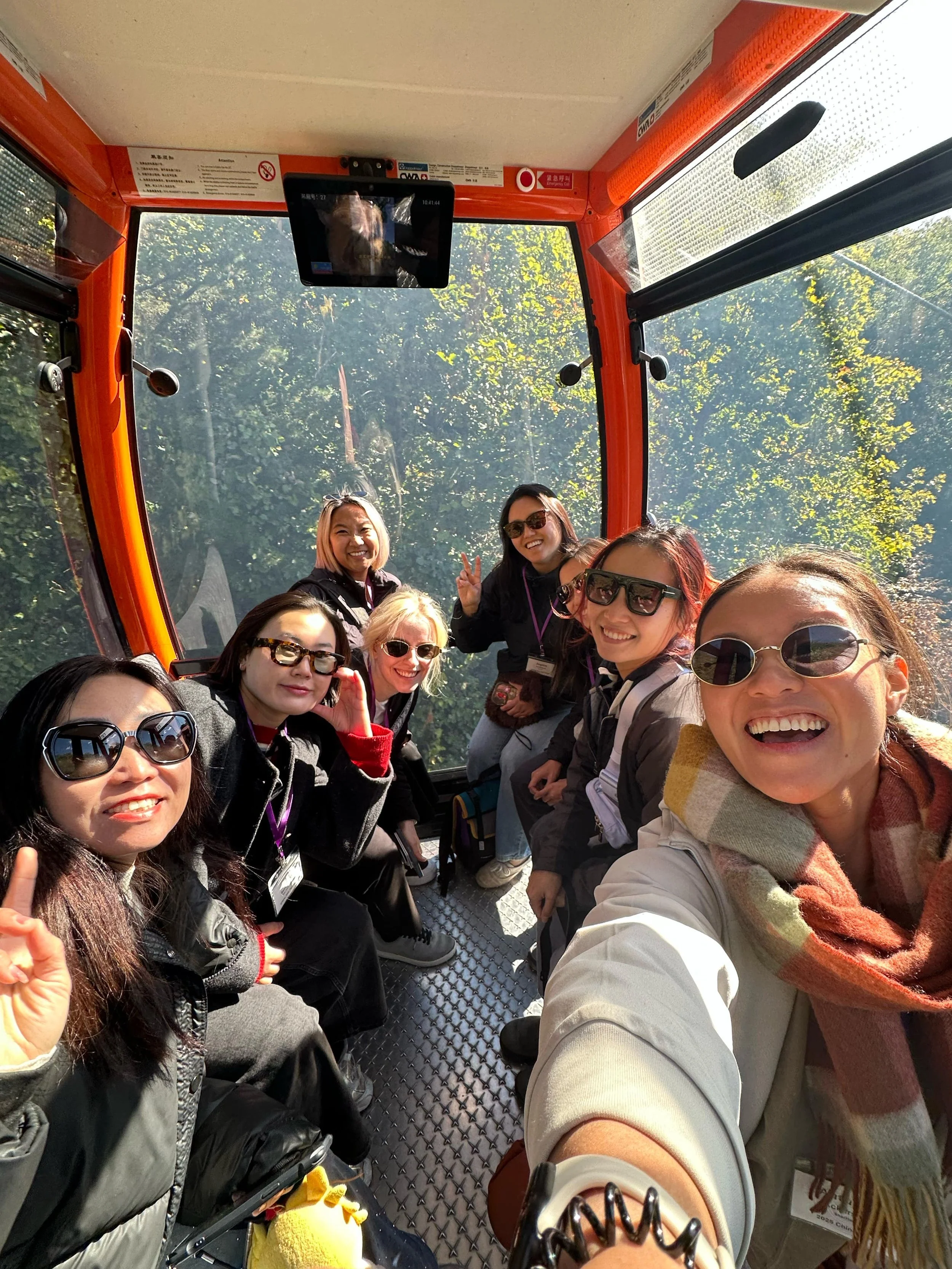
China Ties travelers and their guide, Cindy, riding the gondola up to the Great Wall.
College brought a deeper sense of consciousness. I started examining how the way I was raised shaped who I became. Meeting other adoptees with similar backgrounds—transracial, internationally adopted, and specifically transracial, Chinese adoptees—grounded my experiences in ways I hadn’t expected. For the first time, I felt validated. When I discovered the psychological frameworks researchers and mental health professionals were developing around adoption, I felt seen and heard.
Around this time, I also started hearing stories of more and more Chinese adoptees finding their biological families. I thought: “Why not me?” After college, I intensified my search, pursuing opportunities through nonprofits like The Nanchang Project traveling to China to connect with birth families. And eventually, I found my own, and that’s where my experience with The Ties Program began.
Before traveling with Ties, how would you describe your relationship to your birth country?
Before traveling, I didn’t have a strong impression of China outside of what I saw in C-Dramas that mostly depicted Shanghai and Guangzhou as modern cities and cheesy romance. Aside from that, I only knew about what I read about in historical texts in college and the propaganda and stereotypes perpetuated in western media that I didn’t put much stock into.
What inspired you to join the Ties Program to return to your country of birth? What made you decide this was the right time to travel?
“Finding the Ties was all I could ask for. Run by and for adoptees, they had everything I needed: adoptee centering and community, support for loved ones, and an interesting itinerary that allowed me to travel home to meet my family.”
I began looking at travel groups after I had been digitally reunited with my family and was planning a return trip to meet them. I was going to be traveling with my adoptive parent and knowing there would be a lot of overwhelm and emotions on both ends, I was looking for a way to offload the tedious aspects of planning and scheduling to a third party. Finding Ties was all I could ask for. Run by and for adoptees, they had everything I needed: adoptee centering and community, support for loved ones, and an interesting itinerary that allowed me to travel home to meet my family. I was also lucky to have decided to travel when the 21+ adoptee trip began in the fall/winter which is my preferred seasons of travel!
Was there a moment during the trip that stands out to you most? Please explain.
The moments that stuck out were the casual moments between the scheduled activities. Eating at a small restaurant with just the adoptees, shopping at the mall, taking silly photos all made me feel like a normal Chinese person just hanging out with friends. I couldn’t help but think, “Is this what my life would’ve been like if I hadn’t been taken from my family?” and how it hardly differed from my life in the U.S.
How did it feel returning to your birth country?
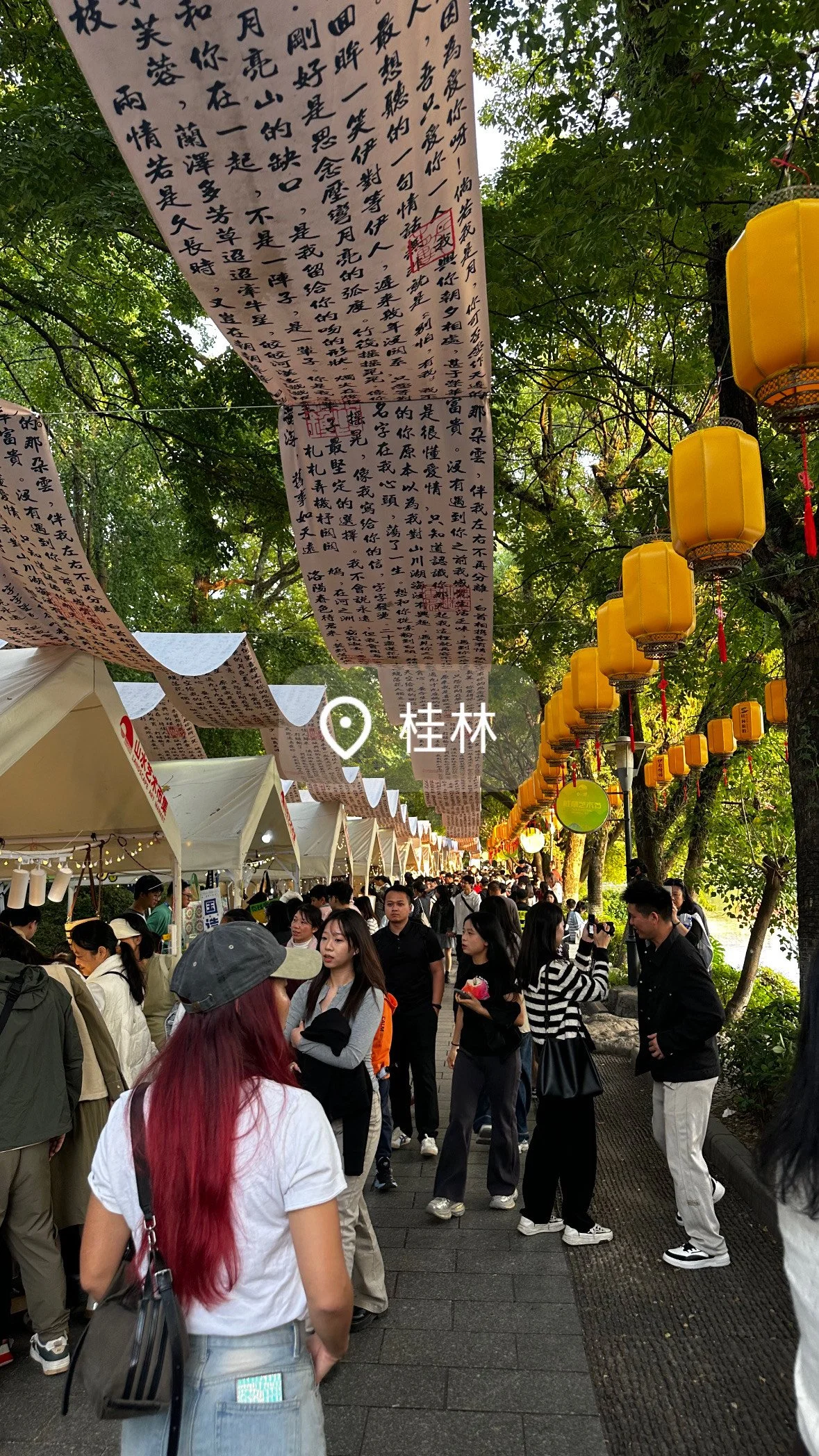
LIz and fellow adoptees browse a night market in Guilin.
It felt like an affirmation: this place is my home too. I love my current city, but I didn’t feel out of place in the various cities in China either. Being a part of the majority, it didn’t feel like the weight of being racialized defined who I was or how I should act. It was like releasing the breath you’ve been holding your entire life. Being back in China, knowing where I came from, gave me a greater sense of confidence, independence, and assuredness in myself that I wouldn’t trade for the world.
How did being in community with other adoptees shape the journey for you?
Having people who could relate to my life experiences made me feel empowered and affirmed. There may have been things I hesitated to do because I wasn’t sure if I could communicate well or if I was being silly for wanting to try. We could support each other through hard emotions and laugh at our cultural faux pas.
How has traveling with the Ties Program changed the way you think about identity, culture, or connection?
Traveling with the Ties affirmed to me the importance of connection with birth country and how everyone’s relationships to country and adoption are unique. We can all be at different places in our self-discovery but there will always be more to learn about ourselves and our places in the world.
What is one tip you would share with other adoptees from your birth country on how to have an amazing time in your birth country?
Don’t spend too much time dreaming up specific expectations about how you should or will feel in a specific situation–just be open to the experiences (or foods) that come your way.
What would you say to another adoptee or family considering a heritage journey like this?
Don’t wait until you think you or your adopted loved one is ready. This isn’t a trip that requires us to be fully realized or healed individuals. The program staff meet you where you’re at and everyone can find something they didn’t know about themselves or their relationship to the adoptee in their lives. Commit to the journey and get your travel documents, the rest will enrich you along the way!
Feeling inspired?
We invite you to explore what a Ties trip might mean for you or your loved ones. Whether you're ready to travel or simply starting to ask the big questions, there's a community here for you.
Learn more about our 2026 China Ties Adult Adoptee Heritage Journey. Request the info packet to explore the itinerary, pricing, and what makes this trip so special.